Indian Exam Study Timer: Plan JEE, NEET, and UPSC Revision

An Indian exam study timer can help you divide a large syllabus into steady daily blocks for JEE, NEET, UPSC, and other competitive exams. Learn how to plan subjects, revision, mocks, and rest.
An Indian exam study timer can make a large competitive exam syllabus feel less confusing. JEE, NEET, UPSC, and other entrance or government exams require months of work. You need to learn concepts, practise questions, revise older topics, take mock tests, and review mistakes. Without a plan, it is easy to spend the whole day studying without knowing what actually improved.
A timer gives each part of preparation a clear place. It helps you begin a difficult subject, protect time for revision, and stop one topic from taking the entire day. The goal is not to study every waking hour. The goal is to use your available hours carefully and return to the most important work again and again.
Why use a timer for competitive exam preparation
Competitive exams reward consistency. One long study day cannot replace regular practice over many weeks. A timer makes a study day easier to repeat because every block has a start, an end, and one job.
It also makes your plan honest. You may think you studied chemistry for three hours, but a timer can show that only one hour was focused practice. That information is useful. It helps you reduce hidden distractions and plan a workload that fits your real attention.
Choose the exam and current priority
Start by naming the exam you are preparing for and the stage you are in. A student learning basics needs a different routine from a student doing full mocks. Write down the subjects, the topics that are weak, and the topics that need maintenance through revision.
Do not copy another student’s timetable without checking your own situation. School, coaching, travel, health, and family responsibilities all affect the hours you can use. A shorter plan that you follow is stronger than an impressive plan that collapses after two days.
Turn the syllabus into timer blocks
A syllabus is not a daily task list. Break each subject into topics and then turn each topic into actions. Instead of writing physics, write revise motion formulas, solve ten mixed questions, or review mistakes from yesterday’s set.
Give new learning, practice, revision, and testing separate labels. This prevents you from counting a passive reading session as if it were the same as solving questions. A good weekly plan includes all four types of work.
Use an Indian exam study timer for JEE preparation
JEE preparation often needs a balance of concept understanding, problem solving, and speed. Use one block to learn or review a concept, then use another block for questions at the level you are currently ready to solve. Do not begin every session with the hardest problem you can find.
After a question set, review the method. Record whether the problem was difficult because of a concept gap, an algebra mistake, a missed condition, or slow decision making. Return to the same idea later through spaced revision instead of assuming one reading will keep it fresh.
For mixed JEE practice, use a timer to change subjects deliberately. A physics block followed by a chemistry or maths block can show whether you can reset your attention. Keep the transition short and write the next task before the break ends.
Use a NEET study timer for recall and questions
NEET preparation benefits from frequent recall because the amount of material is large. Use short blocks for diagrams, definitions, processes, formulas, and questions. Close the book and try to explain the topic before checking the answer.
For biology, do not only underline or reread. Ask yourself what the key terms mean, how a process works, and which details are easy to confuse. For physics and chemistry, combine concept review with questions so you can see whether you can apply the idea.
A NEET study timer can also protect review time. New chapters can feel urgent, but older topics need scheduled returns. Use a weekly block to revisit mistakes and a longer block for a mixed question set.
Use a UPSC study timer for reading and writing
UPSC preparation includes reading, understanding, remembering, connecting ideas, and writing clear answers. A timer can stop news and reference reading from expanding into the whole day. Begin with a question or theme, then read only with that purpose in mind.
After reading, write a short summary from memory. Make a few links to the syllabus, previous topics, or current examples. For answer writing, set a separate block and practise structure: introduction, main points, examples or evidence, and a short conclusion.
Do not confuse collecting material with preparing an answer. A useful UPSC study timer session should end with a note, outline, answer, or set of questions that you can review later.
Plan subject rotation without constant switching
Subject rotation can keep a long preparation day balanced, but changing subjects every few minutes creates noise. Choose blocks that are long enough to enter the work. For example, keep one subject for a focused block, take a short break, and then move to the next planned subject.
Rotate difficult and lighter work when possible. A problem-solving block may be followed by recall or reading. Keep your weakest area visible in the weekly plan so it does not disappear whenever you feel tired.
Add mock tests and timed sections
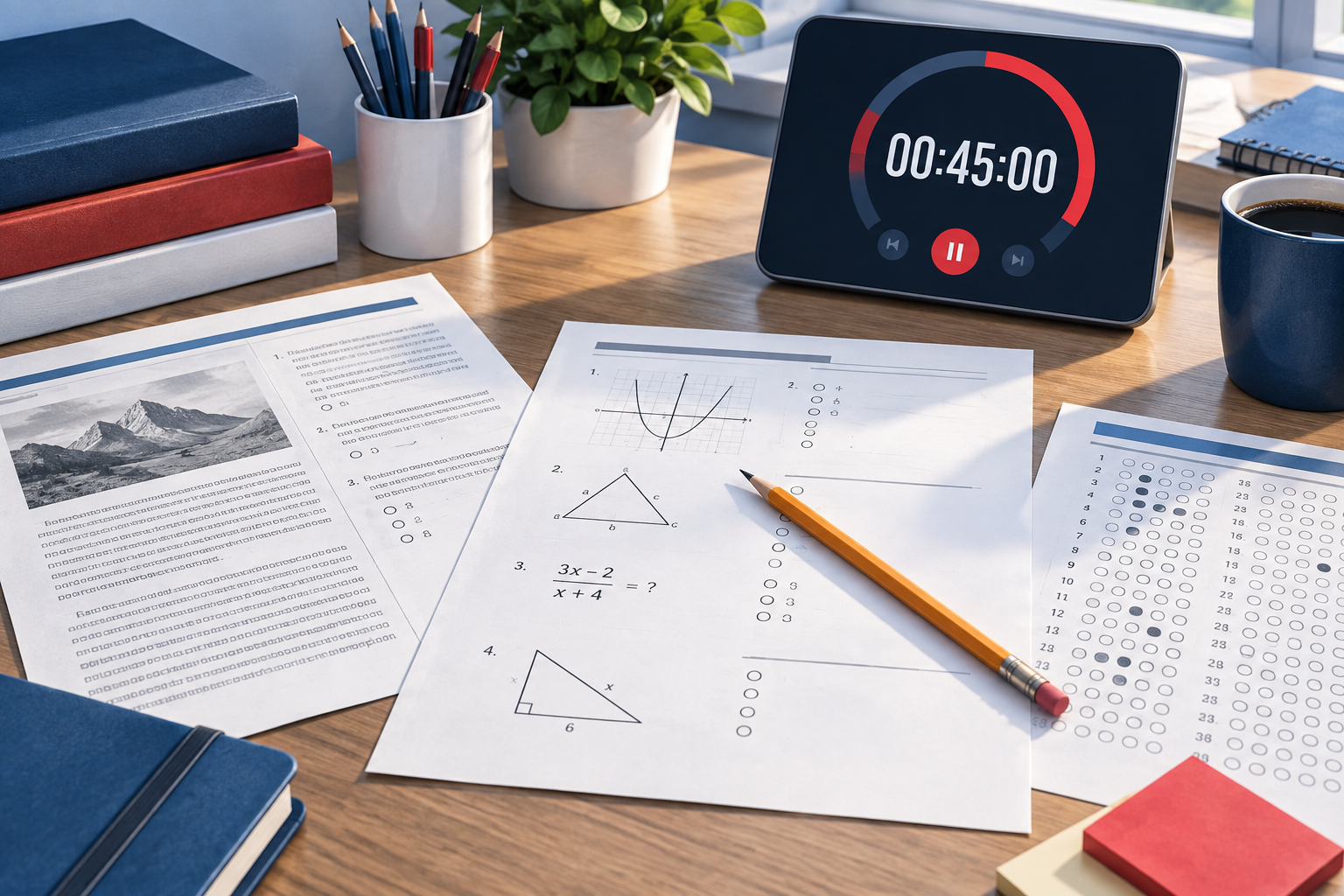
Mock tests are important because they combine knowledge, pacing, concentration, and decision making. Add them when you have enough preparation for the result to teach you something. A mock taken too early can still provide a baseline, but it should not replace learning the basics.
Treat the review as part of the mock. After the test, sort errors into concept gaps, careless mistakes, time problems, and guesses. Write what you will change. A test score without review is only a number; a reviewed test becomes a study plan.
Keep an error log that you revisit
An error log does not need to be beautiful. Record the topic, the question type, what you did, the correct reasoning, and a short reminder for next time. Review it with a timer and try the idea again without looking at the answer.
Group repeated mistakes. If several errors come from the same concept, schedule a learning block. If you know the concept but keep rushing, schedule a slower accuracy block before returning to timed questions. Your error log should change what you do next.
Build realistic daily blocks
Start by estimating your reliable study time, not your ideal study time. Include breaks, meals, travel, classes, and sleep. Then place the most important blocks when you usually have the most energy.
A daily plan might include a concept block, a question block, a short recall block, and a review block. The exact number depends on your level and schedule. Leave a small buffer for tasks that take longer than expected. A plan with no space can fail after one delay.
Use breaks and sleep as part of the plan
Long preparation requires recovery. After a focused block, stand up, drink water, stretch, or walk. Keep the break away from content that is difficult to stop watching. If you need a longer break, decide its end before you begin.
Sleep is not wasted study time. A tired student may sit with a book for hours while remembering very little. Protect a regular sleep routine as much as possible, especially before mock tests and important review days.
Track subject time and results
Use a study time tracker to record both minutes and outcomes. Write completed 30 questions with three weak areas found or revised one topic and recalled it without notes. This gives you a better picture than time alone.
At the end of the week, compare planned and actual time. If one subject takes more time because the basics are weak, adjust the plan. If a subject receives many hours but shows no improvement, change the method and review your mistakes.
Avoid the twelve-hour study myth
Some students believe that a serious candidate must study for an extreme number of hours every day. Hours can sound impressive, but focused work and useful review matter more. A student who solves, checks, recalls, and sleeps well may learn more than a student who sits with open books while exhausted.
Use the timer to find your real productive range. Increase it gradually if your attention remains strong. Build a routine you can repeat across weeks, including days when energy is lower. Consistency is more useful than a short burst followed by burnout.
Common mistakes with an exam study timer
One mistake is making every block a new topic. Revision needs repeated returns, so schedule older material on purpose. Another is using a timer without a task. “Study for two hours” does not tell you what success looks like.
Some students also review only what feels comfortable. Keep weak topics in the rotation, but break them into smaller actions so they do not become impossible. Finally, do not use mock scores to punish yourself. Use them to decide what deserves the next block.
Indian exam study timer questions
How many hours should I study for JEE, NEET, or UPSC?
There is no useful number for every student. Choose a realistic schedule around your school, coaching, health, and current level. Measure focused work and results, then increase gradually if the quality stays good.
What timer length is best for competitive exam revision?
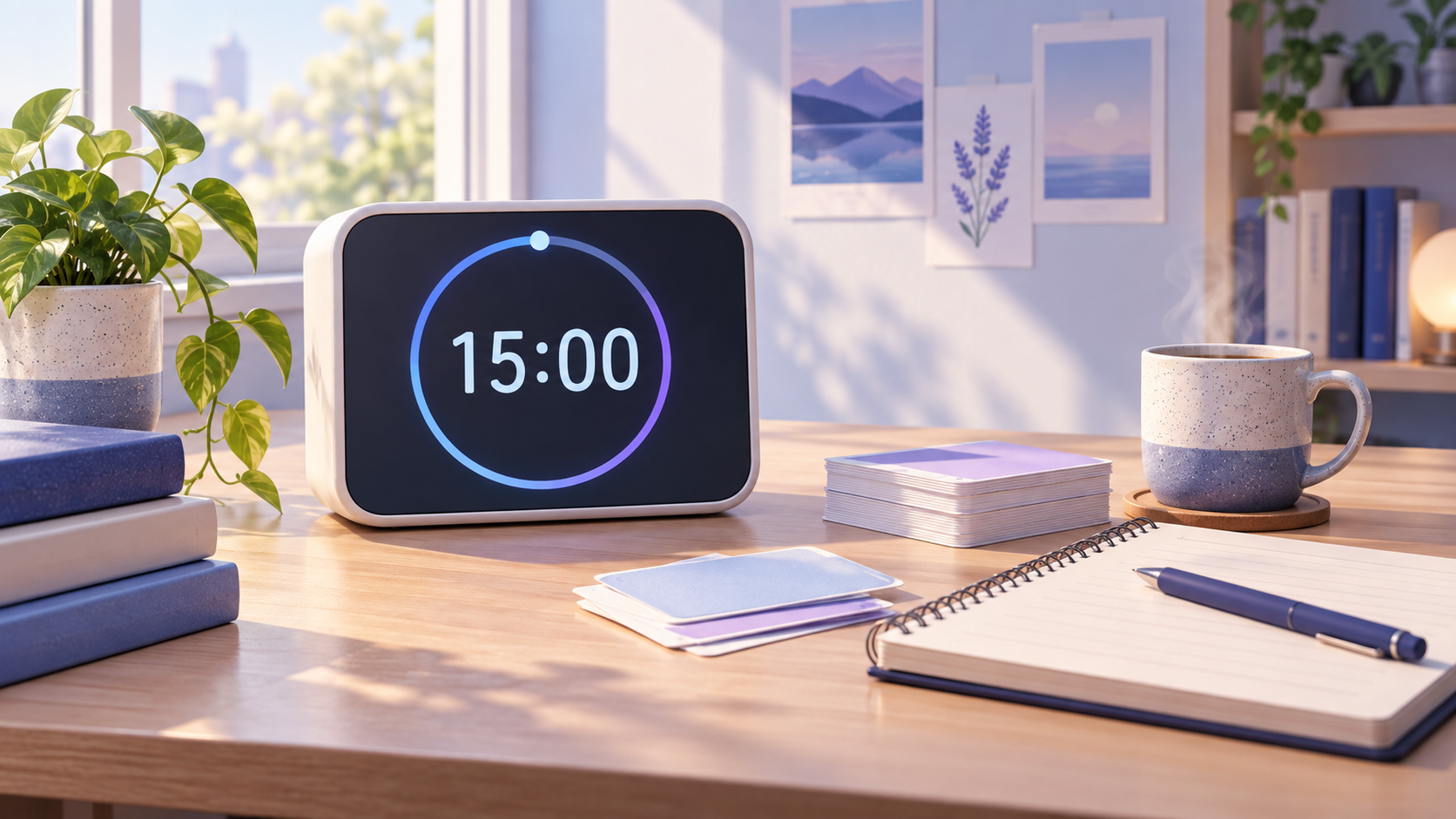
Try 25 or 50-minute blocks for deep practice and shorter 15 or 20-minute blocks for recall, flashcards, and quick review. Use longer timed sessions for mock tests. Match the duration to the task.
Should I study one subject all day?
Some deep work is useful, but most students benefit from planned rotation across subjects. Keep each block focused and switch only at a clear break. Include weak areas and older topics instead of studying only what feels easy.
How should I review mock-test mistakes?
Sort each mistake by cause, write the correct reasoning, and practise the underlying skill again. Review uncertain answers as well as incorrect ones. Use the pattern to plan your next revision blocks.
Related AcademyNC tools
Use the Indian exam study timer to organise focused blocks, the JEE timer or NEET timer for exam-specific sessions, and the study time tracker to compare effort and results. A study planner can help you spread revision, mocks, and rest across the week.
Final thoughts
Competitive exam preparation is a long process, so your system must survive ordinary days. Choose one task, start the timer, work actively, take a real break, and record what you learned. When you repeat that cycle and use mistakes to guide the next block, a large syllabus becomes a series of manageable steps.