20-Minute Study Timer: A Practical Routine for Focused Learning
A 20-minute study timer gives you enough time to make real progress without turning every study session into a marathon. Learn how to plan short, focused blocks that work for school, college, and exam revision.
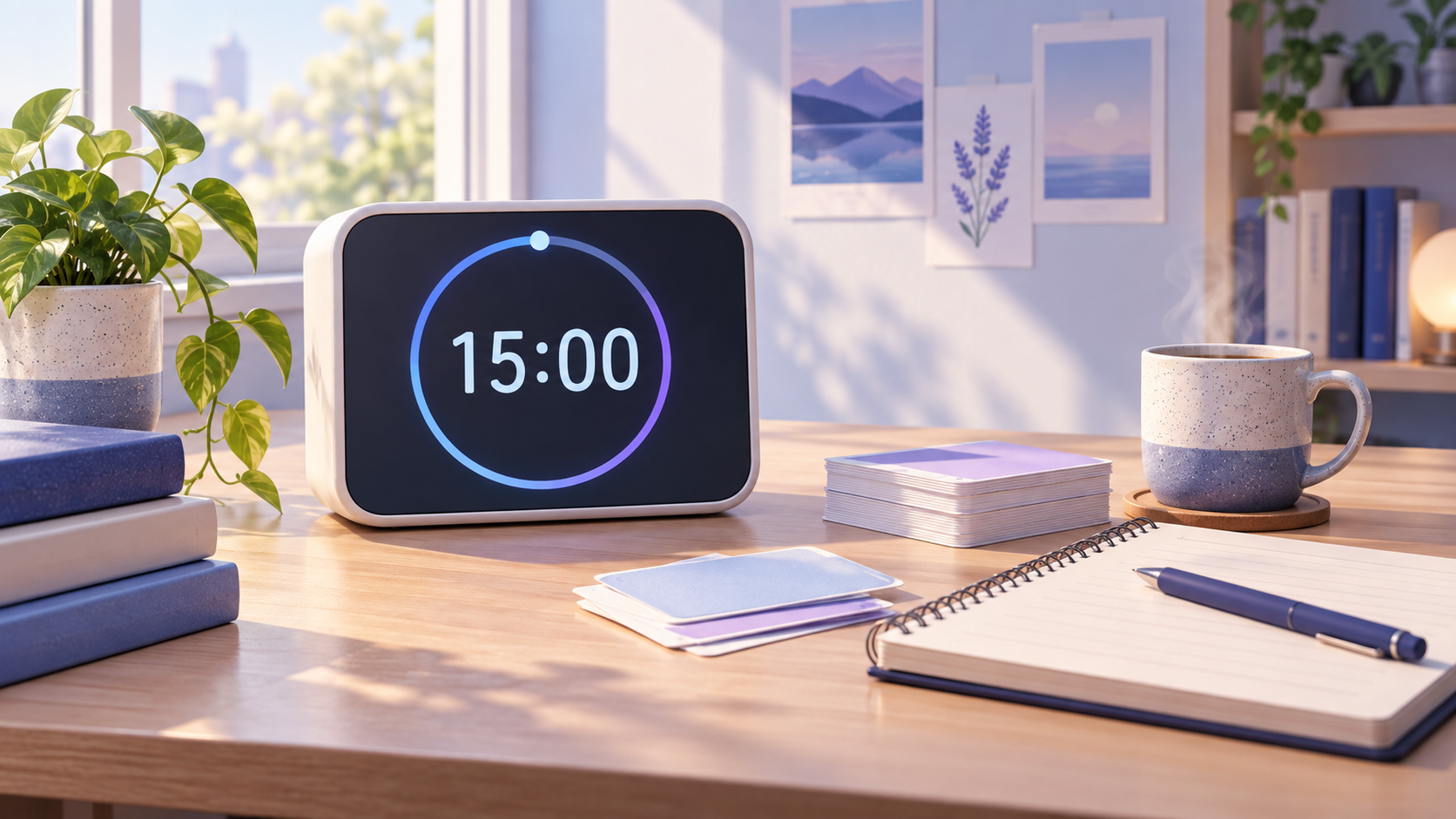
A 20-minute study timer is a useful middle ground. It is longer than a quick five or ten-minute start, but short enough to fit between classes, homework, travel, or other plans. With one clear task, 20 minutes can be enough to review a topic, answer practice questions, make an outline, or find the part of a lesson you still do not understand.
The timer is not meant to make you rush through everything. It gives your attention a clear boundary. You know what you are doing, when you will stop, and what you will check when the time is over. That simple structure can make studying feel less heavy.
Why a 20-minute study timer works
Many students lose time before studying because the task feels too large. “Finish biology” is not a useful instruction. “Explain the steps of photosynthesis from memory for 20 minutes” is much easier to start. A short timer turns a large subject into one visible block.
Twenty minutes also leaves room for real learning. You can spend a few minutes recalling what you know, use the middle of the block for practice, and finish by checking mistakes. It is long enough for a small result but short enough to protect your energy on a busy day.
Set a result before you start
Do not press start while you are still choosing the task. Write a result in one sentence. You might want to complete six algebra questions, create a timeline of one history chapter, review ten flashcards, or write the opening paragraph of an assignment.
A good result is specific and measurable. “Study chemistry” is too broad. “Draw and label the structure of an atom without looking at my notes” gives you something you can check. If the task is still too large, divide it again until it fits one 20-minute block.
Use the first three minutes for setup
Use the first minute to remove obvious distractions. Put your phone away, close unrelated tabs, and keep only the materials for the chosen subject nearby. The second minute is for opening the exact page, question set, or document you need. Use the third minute to write your target where you can see it.
Keep setup short. A neat desk is helpful, but reorganising every folder can become another way to delay the work. The goal is to make starting easy, not to create a perfect study scene.
Choose the right task for a short focused block
A 20-minute session works well for active recall, flashcards, practice questions, a short reading section, vocabulary, a problem-solving warm-up, or an essay outline. It also works for reviewing mistakes from a previous session because you already know where to look.
For a brand-new and difficult chapter, use the block as an introduction. Read the learning goal, learn the main terms, and write down your first questions. You may need a longer block later for examples and deeper practice. The timer is still useful because it helps you start without expecting to master everything immediately.
Use active recall during the timer
Try not to spend the whole 20 minutes rereading. Familiar sentences can feel comfortable without improving memory very much. Close the notes and ask yourself questions instead. What is the main idea? Which steps come first? What example could I give? What formula applies here, and why?
Write or say the answer before checking. When you find a gap, mark it and return to the source for a short explanation. Then close the source again and explain the idea in your own words. This cycle turns the timer into practice, not just exposure to information.
A simple 20-minute study session plan
One useful structure is five minutes of recall, ten minutes of practice, and five minutes of checking. During the first five minutes, write everything you remember about the topic. During the next ten, answer questions, solve examples, or draft a small section. During the final five, check your work and list the next step.
Another structure is three minutes to review yesterday’s mistakes, twelve minutes for a new task, and five minutes to summarise. Choose the version that matches your subject. Maths may need more practice. History may need more recall. Writing may need more drafting time.
Take a useful break after the block
When the timer ends, pause before starting another session. Stand up, drink water, look away from the screen, or walk around for a few minutes. A break should refresh your attention, not pull you into an endless stream of messages or videos.
If you still feel focused, begin a second block after the break. If your accuracy is falling or you are rereading the same line, stop and return later. The purpose of a 20-minute timer is quality attention, not a high number of blocks.
Use 20-minute blocks on busy school days
Short sessions are easy to place around real life. You can review a lesson before dinner, practise questions after class, or prepare tomorrow’s materials before bed. You do not have to wait for a completely free afternoon before you can make progress.
Choose the most valuable topic when time is limited. One focused block on a weak area is usually better than touching five subjects without remembering what you did. Keep a small list of next tasks so you can start quickly the next time you have 20 minutes.
Use the study planner to protect the block
A timer helps you focus in the moment, while a study planner helps you decide where the block belongs. Add the subject, the exact task, and the date you want to review it again. This prevents every session from becoming a last-minute choice.
Plan around energy as well as available time. Put difficult problem solving in a part of the day when you are alert. Keep flashcards or light review for a lower-energy window. A short block is more effective when the task matches your attention.
Track results instead of only minutes
At the end of each session, record what happened. You might write completed eight questions, remembered most of the vocabulary, or found three gaps in the chapter. This makes your time useful even when the result is not perfect.
The study time tracker can show whether 20-minute blocks work better for some subjects than others. After a week, look for patterns. You may discover that short blocks are excellent for review, while essays need two blocks with a break between them. Use the information to improve your plan.
Twenty minutes versus a Pomodoro session
A traditional Pomodoro session often uses 25 minutes of work followed by a break. A 20-minute study timer is slightly shorter and can be easier to fit into a crowded day. Neither duration is automatically better. The best choice depends on the task, your energy, and how often you can return to the material.
You can also use 20 minutes as the work part of your own cycle. For example, work for 20 minutes, rest for five, and repeat twice. If you need a longer stretch for a difficult task, combine two blocks and take a longer break afterward.
Common mistakes to avoid
The first mistake is choosing a task that cannot possibly fit. Break it into a smaller result before starting. The second is using the timer while notifications remain visible. Even a short message can break the attention you worked to build.
Another mistake is judging the session only by pages completed. Learning is not always visible as a page count. Recall, a corrected mistake, a clearer outline, or a useful question can all be real progress. Finally, do not keep adding blocks when you are too tired to think. Rest is part of a sustainable study routine.
20-minute study timer questions
Is 20 minutes enough for studying?
Twenty minutes is enough for many focused tasks, including active recall, flashcards, practice questions, vocabulary, short reading, and outlining. It may be a starting block for a larger task rather than the complete session. Use the timer to make a clear result, then decide whether more time is needed.
What should I do in a 20-minute study session?
Choose one narrow task and work actively. Recall a topic, solve a small set of questions, summarise a reading, draft a paragraph, or review mistakes. Finish by writing what you learned and what you will do next.
How many 20-minute study blocks should I do?
Start with one or two blocks. Add another only when your accuracy and attention remain good. A planned break between blocks is more useful than forcing a long session while distracted.
Can I use a 20-minute timer for exam revision?
Yes. Use it for daily review, practice questions, error correction, and revisiting topics you studied earlier. Combine short blocks with longer practice sessions when the exam requires extended concentration.
Related AcademyNC tools
Use the 20-minute timer for a short focused learning block, the study planner to schedule the next review, and focus mode to reduce distractions while you work. The study time tracker can help you see which subjects benefit from this routine.
Final thoughts
A 20-minute study timer is simple, but simple systems are often easier to repeat. Pick one result, prepare quickly, work actively, and record what happened. When you repeat that process across the week, short sessions can become a steady part of your learning instead of something you only try when a deadline is close.