15-Minute Study Timer: How to Make Short Study Blocks Work
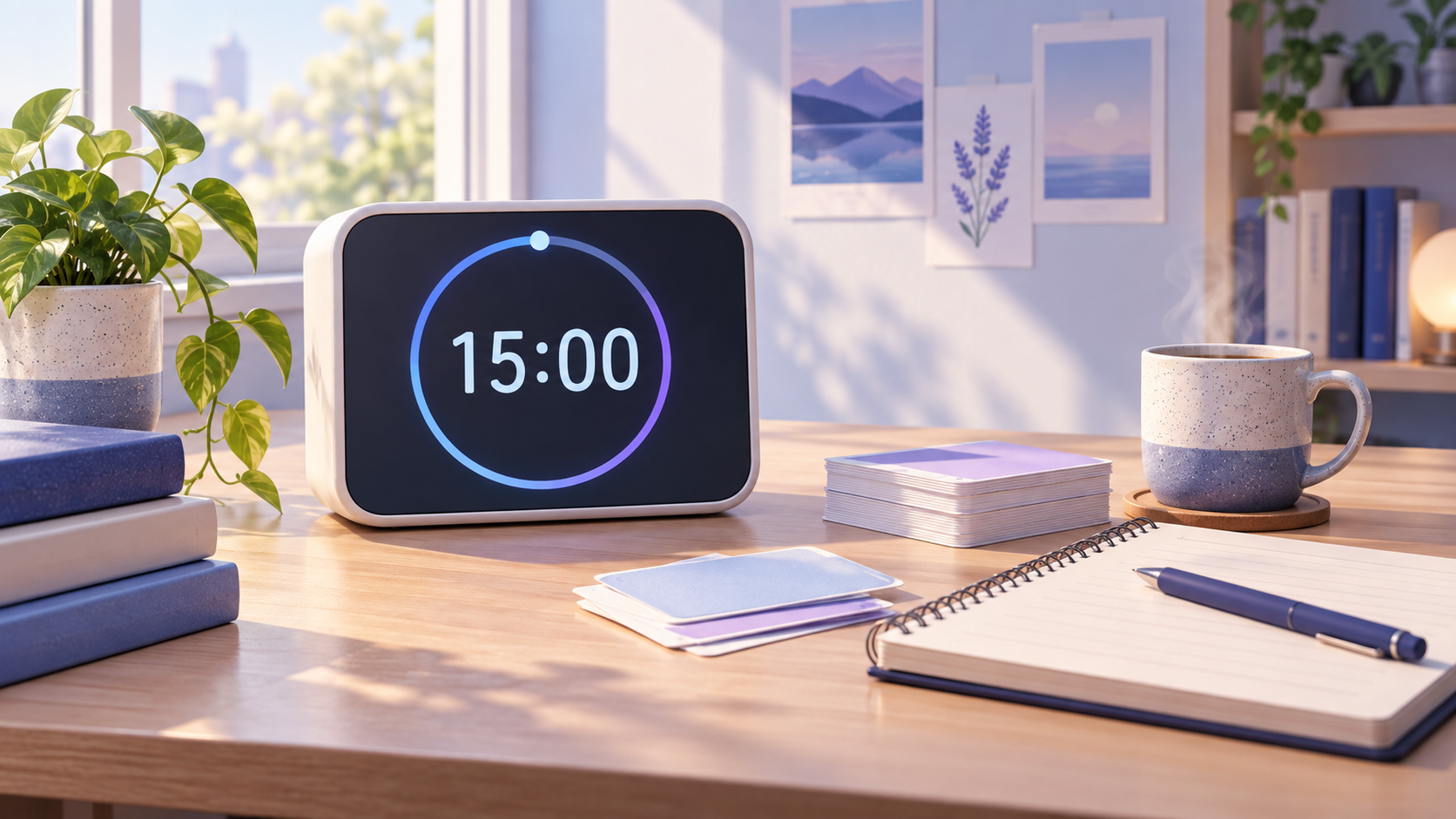
A 15-minute study timer can help you start revision, practise recall, and make progress on difficult days. Learn what to do before, during, and after a short study block.
A 15-minute study timer is useful when a long study session feels impossible. You may be tired after class, unsure where to begin, or worried that you have too much work to finish. Fifteen minutes does not solve an entire syllabus, but it can help you take the first clear step.
The best way to use a short timer is to give the block one small job. Review a page, answer five questions, recall a topic from memory, or organise the next task. When the timer ends, you can stop, take a break, or start another block because you have better information about your energy and progress.
Why use a 15-minute study timer?
Short blocks reduce the pressure of starting. “Study chemistry” is a large and unclear instruction. “Recall the three types of chemical bonds for 15 minutes” is easier to understand. A fixed end also makes it less frightening to begin when you are not feeling motivated.
A 15-minute block works especially well for review, flashcards, practice questions, reading a short section, and preparing an assignment. It is usually better for returning to material than for learning a completely new and difficult chapter from zero. New learning may need a longer block once you are ready.
Set one target before you start
Do not start the countdown while you are still deciding what to do. Write one result you want from the block. Your target might be to complete eight maths questions, explain one biology process, or list the main points from a lecture without looking at your notes.
Make the target small enough to finish but meaningful enough to show progress. If you choose a task that is too large, the timer may end before you have a natural stopping point. If the task is too easy, you may spend the block preparing instead of learning.
Use a quick three-minute setup
Use the first minute to clear extra books, tabs, and notifications. Keep only the materials for the chosen subject in front of you. This prevents your short session from disappearing into setup work.
Use the next minute to write the task in a visible place. In the final setup minute, open the exact page or question set you need. Then start the 15-minute timer. The setup should make studying easier, not become a new form of procrastination.
Choose the right type of 15-minute task
A short timer is flexible, but the activity still matters. For review, close your notes and write what you remember before checking. For flashcards, answer first and mark the cards you missed. For maths or science, solve a small set without immediately reading the solution.
For reading, choose one short section and write a two-sentence summary at the end. For an essay, make a rough outline or write one paragraph without editing every sentence. For vocabulary, test yourself in both directions instead of only recognising the answer.
Try active recall instead of rereading
Rereading is tempting because it feels easy during a short session. The problem is that familiar words can create the feeling that you know the topic even when you cannot explain it alone. Active recall gives the timer a stronger learning purpose.
Close your notes and ask yourself questions. What is the main idea? What example would I use? Which step comes first? What mistake am I likely to make? Spend the last few minutes checking your answers and writing down the gaps.
Use the timer for a revision sprint
A revision sprint is a focused pass over material you have already seen. Pick one topic, set the 15-minute study timer, and keep the session narrow. Do not jump from a history date to a maths formula just because you remember it halfway through.
At the end, label the topic as secure, uncertain, or needs practice. This simple check helps you decide what to do next. If the topic is secure, move on tomorrow. If it is uncertain, schedule another short review. If it needs practice, use a longer session for examples and questions.
Make breaks part of the plan
A short study block still needs a stopping point. When the timer finishes, stand up, look away from the screen, drink water, or walk for a minute. A break should help you return with attention instead of becoming a long scroll through social media.
If you plan to run several blocks, decide the number before you begin. Two 15-minute blocks with a short reset can be enough for a difficult day. Four blocks may work when you are preparing for an exam and your energy is steady.
Know when 15 minutes is not enough
Some tasks need more time. Writing a full essay, learning a new programming concept, solving a long problem set, or reading a dense research paper may require 25, 40, or 50 minutes. You can use the 15-minute block as a warm-up, then switch to a longer session.
Do not judge the short timer by whether it completes every task. Its job may be to remove the fear of starting, identify the next step, or create a useful review checkpoint. The right duration is the one that matches the task and your available attention.
Use a 15-minute timer on busy school days
On a busy day, choose one high-value review rather than trying to touch every subject. A 15-minute block on the hardest topic can protect your understanding even when homework, travel, and activities fill the schedule.
You can also use a short timer between fixed commitments. Review flashcards before dinner, answer a few questions after class, or summarise today’s lecture before you go to sleep. Small sessions are easier to repeat when they fit real life.
Track what short sessions actually produce
Tracking time is more useful when you also record the result. After the timer, write one line such as completed five questions, found two weak areas, or drafted the introduction. This turns the block into evidence instead of an empty number.
The study time tracker can help you compare short blocks with longer sessions. You may find that 15 minutes works well for vocabulary and review but not for essays. Use that pattern to plan better rather than assuming one timer length works for every subject.
Build a streak without chasing perfection
A short session can support a study streak, but a streak should encourage consistency rather than guilt. If you miss a day, restart with one manageable block. Do not try to punish yourself with a late-night marathon.
Choose a simple rule such as one 15-minute review on school days. On weekends, you can add longer practice if needed. The goal is to make showing up normal, not to turn every day into a competition with yesterday.
Common mistakes with a 15-minute study timer
The first mistake is choosing a vague task. The second is spending half the block organising a perfect desk. The third is checking the clock every minute. Start with a clear target and let the timer create the boundary.
Another mistake is filling the break with content that is harder to leave than the study task. Keep breaks boring enough to finish. Finally, do not treat the end sound as proof that the learning is complete. Use the final minute to record what you learned and what comes next.
15-minute study timer questions
Is 15 minutes enough to study?
Fifteen minutes is enough for review, flashcards, active recall, a small question set, or a clear starting step. It may not be enough for a large new topic. Use the timer to match the work to your current attention.
What should I do in a 15-minute study session?
Choose one narrow task. Try recalling a topic, solving a few questions, reading one short section, making an outline, or reviewing mistakes from yesterday. Decide the result before starting.
Should I take a break after 15 minutes?
Yes, especially if you plan to continue. Stand up and reset your eyes and body. If you are still focused, you can begin another block after the short break. If your recall and accuracy are falling, stop and return later.
How many 15-minute study blocks should I do?
Start with one or two. Add more only when the quality of your work stays good. A smaller number of focused blocks is more useful than a long session filled with distractions.
Related AcademyNC tools
Use the 15-minute timer for a quick review sprint, the study timer for longer focused sessions, and the study time tracker to see which subjects respond well to short blocks. Study streaks can help you build a steady routine without relying on motivation every day.
Final thoughts
A 15-minute study timer is not a shortcut around real learning. It is a simple way to begin, practise recall, and keep a busy day from becoming a lost day. Pick one target, remove distractions, work until the timer ends, and write down the next step. Small blocks become powerful when you repeat them with purpose.