How Gen Z Uses TikTok to Find Study Tips, Not Google

Students are searching TikTok, not Google, for study help. Learn what Gen Z is finding, why it works, and how platforms like Academync bridge the gap.
You're stuck on a history essay at 11 PM. Your brain is fried. Do you Google "how to write a thesis statement" and scroll through ten-year-old blog posts? Or do you open TikTok, type in "thesis statement hack," and watch a college senior explain it in 30 seconds while reorganizing their color-coded notes?
If you picked TikTok, you're not alone. In fact, 64% of Gen Z students now use TikTok as a search engine for study tips, learning strategies, and academic hacks. That's not a typo—more than half of your generation is skipping Google entirely when they need help studying.
This shift isn't just about convenience. It's changing how students learn, what they trust, and how they build study habits. But here's the catch: scrolling through viral study hacks doesn't automatically make you a better student. You need a system to turn those tips into real results.
Let's break down why Gen Z is choosing TikTok over Google for studying, what they're actually searching for, and how platforms like Academync help students turn inspiration into execution.
Why Gen Z Uses TikTok Instead of Google for Studying
Google gives you answers. TikTok gives you experiences.
When you search Google for study advice, you get articles written by SEO experts, monetized blogs, and academic sites that feel like reading a textbook. The information might be accurate, but it's dry, overwhelming, and hard to connect with.
TikTok delivers the same information wrapped in a 60-second video from someone who looks like you, talks like you, and gets your struggles. A real college student showing you their actual study routine feels more trustworthy than a generic "Top 10 Study Tips" listicle from 2015.
Here's why TikTok wins for study search:
Visual learning beats text walls. Watching someone demonstrate the Pomodoro Technique or show their digital note-taking system is faster and clearer than reading five paragraphs explaining it. Gen Z grew up on YouTube, Instagram, and Snapchat—they process visual information faster than text.
Real students share real hacks. TikTok's algorithm surfaces content from actual students dealing with actual problems. You're not getting advice from a corporate blog writer who hasn't been in a classroom in a decade. You're learning from someone who just aced organic chemistry using the exact method they're teaching you.
Discovery beats keyword searching. On Google, you need to know what you're looking for. On TikTok, the algorithm shows you study methods you didn't even know existed. Maybe you searched for "focus tips" and discovered body doubling. Maybe you wanted "note-taking ideas" and found Cornell notes, digital planning systems, and aesthetic study templates all in one scroll.
It's faster and more engaging. Gen Z's average attention span is eight seconds. TikTok's short-form format matches how they consume information. Why read a 2,000-word article when a 45-second video covers the same ground?
According to recent studies, 74% of Gen Z uses TikTok search, and 51% prefer it over Google. That preference is especially strong for lifestyle searches—like studying, productivity, and learning hacks—where personal experience matters more than technical accuracy.
What Students Are Actually Searching on TikTok
So what are millions of students typing into TikTok's search bar every day? The topics reveal exactly where traditional study advice is failing Gen Z.
Study with me sessions and body doubling. Thousands of students search for "study with me" videos and live streams. These aren't tutorials—they're virtual study halls where you work alongside someone else. Body doubling (studying while someone else studies) tricks your brain into focusing. It's the accountability of a coffee shop study session, minus the overpriced latte.
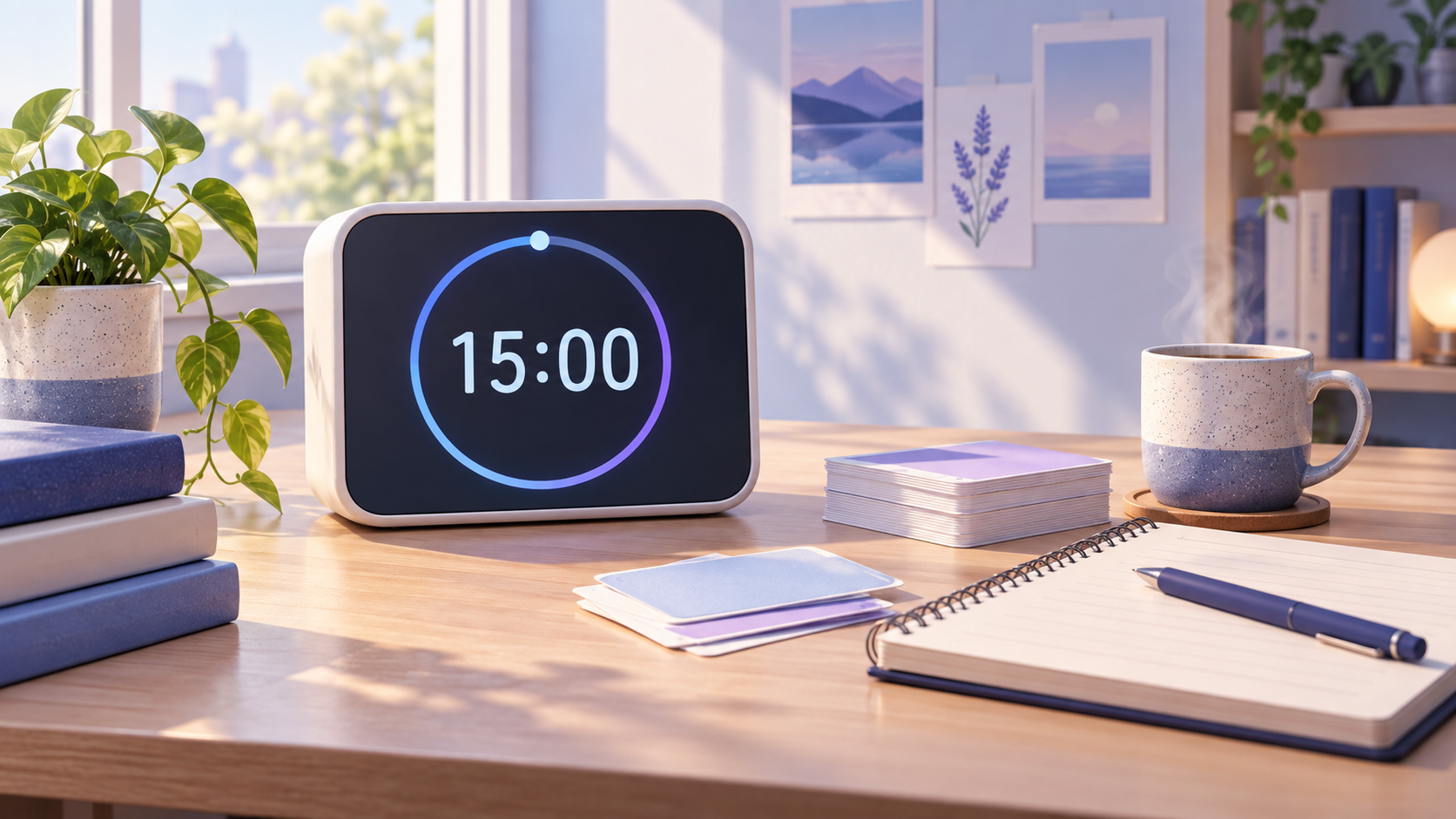
Pomodoro method variations. The classic 25-minutes-on, 5-minutes-off technique is everywhere on StudyTok. But students are searching for tweaked versions: 50/10 for deep work, 15/5 for ADHD-friendly focus, or anime-themed Pomodoro timers. They're looking for the version that actually works for their brain, not just the textbook definition.
ADHD study tips and neurodivergent hacks. This is huge. Students are searching for "ADHD study hacks," "how to study with ADHD," and "neurodivergent productivity tips" in massive numbers. Traditional study advice assumes everyone's brain works the same way. TikTok creators with ADHD share strategies that actually work for executive dysfunction, hyperfocus, and sensory needs.
Exam shortcuts and memorization tricks. Gen Z isn't interested in "study harder." They want "study smarter." Searches like "memorize formulas fast," "exam shortcuts," "cram study method," and "last-minute study tips" dominate. They're looking for efficiency, not just effort.
Aesthetic study routines and motivation. Productivity porn is real. Students search for "aesthetic study routine," "study vlog," "dark academia study," and "that girl morning routine" not just for tips, but for inspiration. The visual motivation keeps them coming back.
Active recall and spaced repetition. These evidence-based learning techniques are blowing up on TikTok. Students search for "active recall method," "flashcard techniques," and "how to use Anki" because influencers make these scientifically-backed strategies feel accessible instead of academic.
The variety is telling. Students aren't just searching for generic advice—they're looking for methods tailored to their learning style, neurodivergence, time constraints, and even aesthetic preferences.
TikTok vs Google for Study Search: Where Each Platform Wins
Let's be clear: TikTok isn't replacing Google for everything. Both have strengths and weaknesses when it comes to studying.
TikTok wins on:
Speed and engagement. You get answers in seconds, delivered in an entertaining format. No digging through ten tabs or skimming walls of text.
Inspiration and motivation. Watching someone else crush their goals makes you want to do the same. Google can't replicate that emotional connection.
Trend-driven discovery. You discover new methods you never thought to search for. The algorithm introduces you to techniques outside your awareness.
Peer-to-peer trust. Real students feel more credible than faceless websites. You trust someone who's currently living what they're teaching.
Google wins on:
Depth and detail. If you need to understand the science behind spaced repetition or want a comprehensive guide to a study method, Google delivers long-form content TikTok can't match.
Accuracy and verification. Academic sources, peer-reviewed research, and expert-written guides live on Google. TikTok's study advice isn't always fact-checked.
Evergreen content. Google's content stays accessible forever. TikTok videos can disappear or get buried by the algorithm.
Structured information. When you need step-by-step instructions or technical explanations, Google's organized format works better than scattered short videos.
The reality? Most students use both. TikTok for quick inspiration and relatable hacks. Google for detailed research and verified information. The problem starts when students treat TikTok as their only resource.
The Hidden Problem: Study Tips Without Systems
Here's the uncomfortable truth about TikTok study advice: watching it feels productive, but it's not the same as actually studying.
You can spend an hour on TikTok learning about the Pomodoro Technique, Cornell notes, and active recall. You'll feel motivated. You'll save a dozen videos to watch later. You might even think, "I'm going to start this tomorrow."
And then tomorrow comes, and... nothing changes.
Random tips don't create consistency. Seeing fifty different study methods in one scroll session is overwhelming. Without a system to apply them, they're just noise.
Motivation fades fast. That 2 AM burst of motivation after watching a "study like Rory Gilmore" video? It's gone by the time your 8 AM class rolls around. Motivation is temporary. Habits are what stick.
Information doesn't equal execution. Knowing about a study technique and actually using it are completely different. TikTok gives you knowledge. It doesn't give you the discipline, accountability, or structure to implement it.
Algorithm-driven distraction. You opened TikTok to learn about the Pomodoro Technique. Thirty minutes later, you've watched study vlogs, productivity routines, and completely unrelated content. The platform that was supposed to help you focus just ate your focus time.
This is the gap between viral study content and actual academic results. And it's exactly the gap Academync was designed to fill.
How Students Can Turn TikTok Tips Into Real Study Habits
So how do you actually use TikTok's study advice without falling into the endless scroll trap?
Set boundaries before you search. Decide what you're looking for before opening TikTok. "I need a focus technique for writing essays" is specific. "Study tips" is a black hole. Get your answer and close the app.
Test one method at a time. Don't try to implement every hack you see. Pick one technique—maybe the Pomodoro method—and use it for a full week before moving on. Consistency beats variety.
Schedule application time. Watching study tips isn't studying. Block specific times to actually implement what you learned. If you watched a video about Cornell notes, schedule 30 minutes to try it with your next lecture.
Track what works for you. Not every viral study hack will fit your brain or schedule. Keep a simple note of what you've tried and what actually helped. Drop what doesn't work without guilt.
Study with others, not alone. The biggest predictor of study success isn't the technique you use—it's whether you have accountability. Finding study partners or accountability buddies turns knowledge into action.
This last point is crucial. TikTok can show you how to study, but it can't make you show up. That's where structured platforms designed for accountability come in.
How Academync Fits Into Gen Z Learning
TikTok reveals what's possible. Academync helps you actually do the work.
Think of Academync as the bridge between the study hacks you find on TikTok and the grades you want to earn. It's built specifically for students who love the idea of productive study sessions but struggle to stay consistent alone.
Here's how it works:
Shared Pomodoro rooms for real-time focus. Remember all those "study with me" videos you watch? Academync turns that into a live, interactive experience. Join a virtual study room where you and other students work through Pomodoro sessions together. You get the focus benefits of body doubling without coordinating schedules or finding a physical study group.
Study partners for social accountability. The platform matches you with accountability partners who share your study goals. Instead of working alone (and inevitably checking your phone), you have someone expecting you to show up. Social pressure is the strongest motivator—Academync harnesses it for good.
Clean, distraction-free interface. Unlike TikTok, Academync doesn't have an algorithm trying to keep you scrolling. The UI is simple and focused: timer, task list, study room. No feeds. No recommended videos. Just you and your work.
Habit tracking that shows progress. Watching study content feels productive in the moment, but you can't track it. Academync shows you exactly how much focused work you're putting in. Seeing your study streaks build creates momentum that motivation videos can't sustain.
Academync isn't trying to replace TikTok. It's designed to complement it. You get inspiration and techniques from StudyTok. You execute them consistently on Academync. It's the difference between knowing what productive students do and actually being one.
The platform understands how Gen Z studies: visually, socially, and with structure that doesn't feel rigid. It's not your parents' study method. It's designed for students who need accountability without judgment, flexibility without chaos, and community without distraction.
The Future of Study Search: Social, Structured, and Student-Driven
The way Gen Z searches for study help is changing education itself.
Traditional learning resources—textbooks, academic websites, and even Google—are designed for individual, self-directed study. But Gen Z doesn't work that way. They learn socially, visually, and collaboratively. They want real people, not institutions. They trust peers over professionals.
TikTok proved that students want:
- Short, visual explanations over long text
- Peer recommendations over expert advice
- Personalized methods over one-size-fits-all systems
- Inspiration that's entertaining, not just informative
But TikTok alone can't solve the execution problem. The future belongs to platforms that combine TikTok's social discovery with the structure and accountability that actually changes behavior.
That's where platforms like Academync come in. They take the best of social learning—community, real-time interaction, peer accountability—and add the systems that turn inspiration into habits. They're built for students who get their study tips from TikTok but need more than motivation to actually use them.
As AI and social search continue to evolve, expect to see more platforms blending discovery with execution. The winning formula will be: find inspiration anywhere, build habits somewhere structured, and do it with others, not alone.
Gen Z is already living this. They search TikTok for what to try, use platforms like Academync to actually try it, and return to their communities to share what worked. It's a cycle of discovery, execution, and feedback that traditional education never offered.
Frequently Asked Questions
Why do Gen Z students use TikTok instead of Google for studying?
Gen Z prefers TikTok because it delivers visual, relatable study advice from real students in short, engaging videos. Unlike Google's text-heavy articles, TikTok makes learning feel personal, fast, and trustworthy. The algorithm also introduces students to study methods they wouldn't have thought to search for, creating a discovery experience Google can't match.
Is TikTok actually good for studying?
TikTok is excellent for discovering study techniques, finding motivation, and learning from other students' experiences. However, it's not a replacement for actually studying. The platform works best as a source of inspiration and ideas, but students need structured systems to apply what they learn. Watching study tips isn't the same as using them.
Can TikTok replace Google for learning?
Not entirely. TikTok excels at quick tips, visual demonstrations, and peer-to-peer advice. Google is better for in-depth research, verified information, and comprehensive guides. Most successful students use both: TikTok for inspiration and discovery, Google for detailed information and fact-checking.
What are the best TikTok study tips that actually work?
The most popular and effective TikTok study methods include the Pomodoro Technique (timed focus sessions), active recall (testing yourself instead of re-reading), body doubling (studying alongside others), and spaced repetition (reviewing material at increasing intervals). Students also love aesthetic study setups and "study with me" videos for motivation.
How can students stay focused after watching study content on TikTok?
Set specific intentions before opening TikTok, limit time spent browsing, and immediately schedule time to apply what you learned. Better yet, use accountability platforms like Academync to turn tips into actual study sessions. The key is treating TikTok as a learning tool, not entertainment, and having systems in place to implement the advice.
Are social study platforms better than traditional search engines for students?
Social platforms offer peer accountability, real-time interaction, and relatable advice that search engines can't provide. However, they work best when combined with structured systems. Platforms like Academync that blend social features with productivity tools give students both the community benefits of social media and the focus tools needed to actually study effectively.
Conclusion: From Watching to Doing
TikTok showed Gen Z what's possible when studying doesn't feel like punishment. It proved that productivity can be aesthetic, that study tips can come from peers, and that learning communities don't need to exist in physical libraries.
But here's what TikTok can't do: make you show up. Build your habits. Keep you accountable when motivation fades.
That's where platforms like Academync come in. They don't try to replace the inspiration you find on TikTok. They help you actually use it. Shared study rooms turn "study with me" videos into real accountability. Study partners keep you consistent when that viral productivity routine loses its shine. Clean interfaces remove the algorithm that turned a five-minute study tip search into an hour-long scroll session.
The future of studying isn't TikTok versus traditional methods. It's TikTok for discovery, structured platforms for execution, and real communities for accountability. It's social, it's visual, and it's driven by students who refuse to study the way their parents did.
Gen Z isn't lazy for preferring TikTok over Google. They're adapting learning to fit their actual needs: fast answers, visual explanations, peer connection, and methods that work for their brains.
The question isn't whether you should use TikTok to find study tips. You already are. The question is: what system will you use to actually apply them?
Because information without execution is just entertainment. And you've got exams to pass.