Study Partners for ADHD: Improve Focus & Retention

Discover how study partners improve focus and retention for ADHD students. Learn collaborative learning strategies, dopamine activation, and proven techniques that work.
Students with ADHD face unique challenges in traditional learning environments. They don't lack intelligence—they struggle with focus, task initiation, and information retention. While peers without ADHD might thrive studying alone with a textbook and a quiet room, many ADHD students find that solo studying amplifies their symptoms. Distractions multiply, motivation plummets, and the struggle to retain information becomes exhausting.
But what if the solution wasn't more willpower or stricter discipline? What if collaborative learning with study partners offered a proven alternative that works with the ADHD brain, not against it?
ADHD and study partners represent a powerful combination. Research shows that when ADHD students engage in collaborative learning, they experience significant improvements in focus, task completion, and memory retention. This article explores the science behind peer learning for ADHD students and provides practical strategies for building sustainable study partnerships that truly work.
Why Studying Alone Is Hard for ADHD Brains
To understand why study partners improve focus for ADHD students, we first need to understand how the ADHD brain processes learning differently.
Low Dopamine During Passive Study
The ADHD brain relies heavily on dopamine—a neurotransmitter essential for motivation, focus, and reward. When a student with ADHD sits down to study alone, the passive nature of the task provides insufficient dopamine stimulation. Reading textbook pages or reviewing notes doesn't trigger the neurological "reward" needed to maintain attention.
Solo studying becomes a battle between intention and neurochemistry. The student wants to focus, but their brain isn't getting the biochemical signals needed to sustain it.
Time Blindness and Task Initiation Problems
One hallmark of ADHD is time blindness—the inability to accurately perceive or manage the passage of time. A student might sit down to study and lose track of how long they've been working (or not working). Additionally, ADHD students often experience paralysis when starting tasks, especially tedious or abstract ones.
Task initiation is separate from laziness. The student may desperately want to begin, but the executive function deficit creates a barrier. Without external structure or a deadline that feels real, starting feels impossible.
Distractions Multiply Without External Structure
ADHD brains are hyperresponsive to environmental stimuli. A notification ping, a thought about an upcoming event, or visual clutter can derail focus within seconds. Without external accountability or structure, distractions don't feel like interruptions—they feel like natural detours.
The Science Behind Collaborative Learning for ADHD
Collaborative learning doesn't just feel helpful for ADHD students—neuroscience explains why it works.
Social Accountability Boosts Dopamine
Research shows that social encounters activate the dopamine pathway, which is critical for motivation and reward. When you study with a partner, you're not just sharing notes—you're triggering your brain's reward system.
The mere presence of another person working alongside you creates accountability without judgment. This gentle social pressure activates dopamine pathways, providing the neurochemical boost that solo studying cannot.
Verbalizing Thoughts Improves Memory Encoding
When you study alone, you might passively read information. When you study with a partner, you must explain concepts aloud.
This seemingly simple shift is transformative for retention. Speaking aloud engages deeper processing—your brain encodes information through multiple sensory channels (visual, auditory, and kinesthetic). Research on the teach-back effect demonstrates that explaining material to someone else strengthens memory consolidation far more effectively than silent review.
Mirror Neurons and Peer Modeling Increase Engagement
Mirror neurons are brain cells that fire both when we act and when we observe others acting. Watching your study partner focus and work activates these neurons, naturally encouraging you to mirror the same focused behavior.
This "unconscious imitation" works in your favor. You see someone else working productively, and your brain naturally begins working the same way. It's not a conscious decision—it's neurological synchronization.
Research-Backed Benefits of Active Learning
Decades of research confirm that active learning—where students engage directly with material rather than passively consuming it—produces superior retention and academic outcomes. Collaborative study groups create the conditions for active learning naturally.
Studies show that students who participate in peer-mediated learning demonstrate significant improvements in planning strategies, problem-solving efficiency, and academic performance compared to those studying alone.
How Study Partners Improve Focus for ADHD Students
Beyond the neuroscience, there are practical, immediate ways that study partnerships support focus.
External Structure Replaces Internal Discipline
The fundamental problem with solo studying for ADHD students isn't willpower—it's the absence of external structure. A scheduled study session with a partner creates structure that the ADHD brain cannot generate independently.
When you know someone is expecting you at 3 PM to study together, showing up becomes a social obligation, not a personal discipline decision. That external framework is often all that's needed to overcome task initiation paralysis.
Real-Time Feedback Prevents Mental Drift
A study partner provides immediate, real-time feedback. If your mind wanders or you misunderstand a concept, your partner notices and gently redirects you. This continuous gentle correction keeps you anchored to the task.
Unlike studying alone, where mental drift goes undetected until you realize you've read the same paragraph five times, a partner creates accountability in real time.
Scheduled Sessions Reduce Procrastination
ADHD students often struggle with time blindness and procrastination. A scheduled study session with a partner transforms a vague intention ("I should study this weekend") into a concrete appointment.
The accountability of meeting someone at a specific time is often the difference between procrastinating and actually beginning.
Why Collaborative Learning Improves Retention
ADHD retention techniques are most effective when they leverage the brain's natural strengths. Collaborative learning does exactly that.
The Teach-Back Effect Strengthens Memory
When you explain material to your study partner, you're not just helping them—you're cementing your own understanding. The teach-back effect (also called elaboration) is one of the most robust memory-strengthening techniques in educational psychology.
Your brain doesn't passively store what you hear. It actively constructs meaning by explaining concepts in your own words. This deep processing creates stronger memory traces than passive review ever could.
Repetition Through Discussion Reinforces Learning
Repetition is essential for moving information from short-term to long-term memory. But repetition through discussion is far more engaging than rereading notes.
When you discuss a topic with a partner, you encounter it multiple times from different angles. Your partner asks questions you hadn't considered. You explain it differently than the textbook does. This varied repetition creates richer, more flexible memories.
Emotional Engagement Improves Recall
Memory research consistently shows that information connected to emotion is remembered better. Solo studying feels isolating and sometimes frustrating for ADHD students.
Studying with a partner creates a social, interactive experience. This emotional engagement—even simple enjoyment of the interaction—enhances memory encoding and long-term retention.
Best Types of Study Partners for ADHD
Not all study partnerships are equally effective. The right match matters significantly.
Accountability Partners With the Same Schedule
An accountability partner is someone who shares your study schedule and goals. You meet at the same time each week, and you're both working on similar material. This alignment creates genuine mutual accountability.
The best accountability partners are peers who understand ADHD challenges and don't judge when focus lapses occur. They provide gentle redirection rather than criticism.
Complementary Learners With Balanced Strengths
A complementary learner is someone with different strengths than you. If you struggle with organization but excel at verbal explanation, partnering with someone strong in organization creates balance.
This pairing works because you both teach the other something valuable. Your partner helps you organize your notes while you help them articulate concepts clearly.
Small Groups Versus One-on-One: Pros and Cons
One-on-one study partnerships offer focused attention, personalized pacing, and deeper conversation. They're ideal if social anxiety accompanies your ADHD or if you need one-on-one accountability.
Small groups (2-4 students) provide more diverse perspectives and reduce dependency on a single person. However, larger groups can become social sessions rather than study sessions, and coordinating schedules becomes complex.
For most ADHD students, one-on-one partnerships or pairs studying together work best. Once you've developed solid study habits with a partner, small group study becomes more sustainable.
Common Mistakes ADHD Students Make With Group Study
Even with the best intentions, study partnerships can derail without structure.
Groups That Are Too Large
The moment your study group exceeds 4-5 people, the focus shifts from learning to socializing. With ADHD's susceptibility to distraction, large groups almost guarantee that the session becomes a social hangout rather than productive study time.
Keep study groups small and selective.
Sessions With No Structure or Timer
A vague plan ("let's study together") often devolves into unfocused conversation. Without clear structure—a specific topic to cover, a set duration, predetermined breaks—ADHD students easily lose track and drift.
Always use a timer and define what you're studying before you begin.
Socializing Instead of Studying
This isn't laziness—it's the natural tendency of social creatures. But when a study session becomes primarily social, retention suffers.
Set ground rules: discussions stay on-topic during work periods, and socializing happens during designated breaks. Some partnerships benefit from no-talking study sessions where partners work silently in the same space.
How Platforms Like Academync Support ADHD-Friendly Collaborative Learning
Platforms designed for neurodivergent learners understand the specific barriers that ADHD students face. The best platforms don't just connect students—they create environments optimized for focus.
Shared Pomodoro Rooms Create External Time Structure
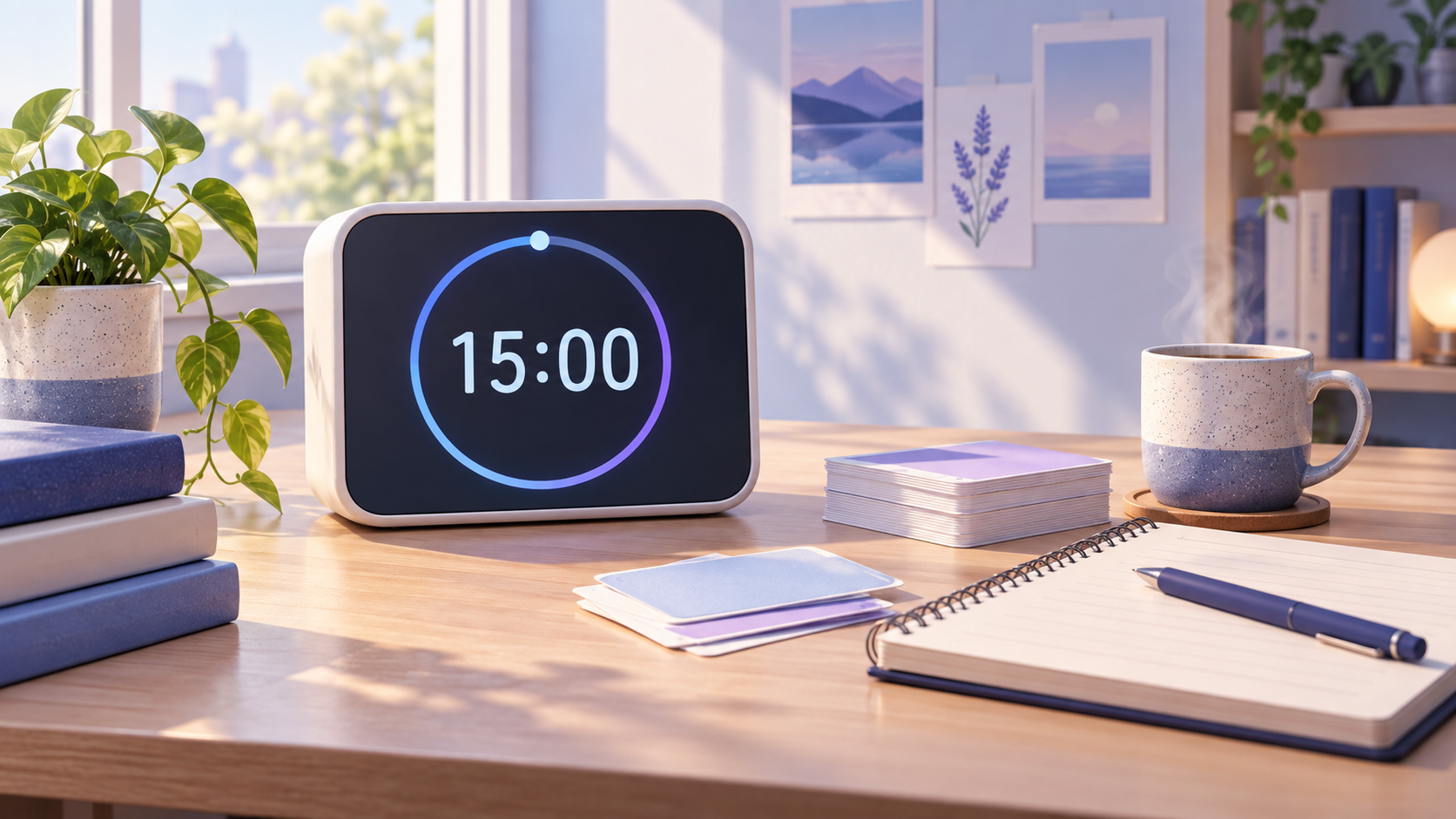
The Pomodoro Technique (25 minutes of focused work, 5-minute break) is exceptionally effective for ADHD because it breaks work into manageable chunks and provides a timer—external structure that the ADHD brain needs.
When paired with a shared study space where you and your partner work on the same timer, it becomes even more powerful. Both of you are working on the same 25-minute cycle, providing synchronized structure.
Study Partners on the Same Timer Address Time Blindness
Time blindness is a core ADHD challenge. A shared timer creates shared accountability to that structure. When you see your partner working within the time block, it reinforces your own commitment to the same boundary.
This might seem like a small feature, but for ADHD students, it's transformative.
Distraction-Free UI Designed for Focus
A cluttered interface with notifications and distractions defeats the purpose of collaborative study. Platforms built with ADHD in mind eliminate visual clutter, limit notifications, and create calm, focused spaces.
A clean, purposeful interface removes decision fatigue and environmental cognitive load.
Gentle Accountability Without Pressure
Effective platforms provide accountability through positive reinforcement, not pressure. Your study partner's presence is encouraging, not demanding. The system supports you without creating anxiety.
This balance is crucial—accountability that creates stress defeats the purpose.
Academync positions itself not as a cure or a treatment, but as a learning environment where ADHD students can study more effectively through built-in structure, partnership, and design choices that acknowledge how neurodivergent brains work best.
Practical Tips to Start Studying With Partners Today
Ready to build a study partnership that actually works for ADHD?
Use Fixed-Time Sessions
Schedule your study sessions at the same time each week. Consistency matters more than duration. Two 25-minute sessions at the same time weekly is better than random, unpredictable study attempts.
Set One Clear Goal Per Session
Don't say, "Let's study biology." Say, "We're reviewing cellular respiration diagrams and teaching each other the steps."
One focused goal prevents scope creep and keeps the session purposeful.
Keep Sessions Short (25–40 Minutes)
Attention span limitations aren't character flaws—they're neurological reality. A focused 25-minute session where you're both engaged is more productive than a hour-long session where focus deteriorates after 15 minutes.
Use the Pomodoro structure: 25 minutes focused work, 5-minute break, repeat 3-4 times.
Always Debrief at the End
Spend 2-3 minutes at the end of each session discussing what worked and what didn't. Did you stay on task? Was the goal clear? Did you help each other understand the material?
This reflection reinforces learning and optimizes future sessions.
Frequently Asked Questions
Are study partners good for ADHD?
Yes. Research shows that collaborative learning with trained partners produces significant improvements in focus, task completion, planning strategies, and academic performance for students with ADHD. The structure, accountability, and dopamine activation that study partnerships provide address core ADHD challenges.
How can ADHD students stay focused while studying?
Use external structure: fixed-time sessions, timers (Pomodoro Technique), and study partners. Remove distractions from your environment. Set one clear goal per session. Take movement breaks every 25 minutes. Break material into smaller chunks rather than attempting to tackle everything at once.
Is group study better than solo study for ADHD?
For most ADHD students, yes—but with caveats. Small group study (1-on-1 partnerships or pairs) is significantly better than solo studying because it provides structure, accountability, and dopamine activation. However, large groups (5+ people) often devolve into socializing. The ideal is a carefully chosen study partner or small group with clear structure.
What tools help ADHD students study with others?
Timers (physical or app-based), shared note-taking apps (Google Docs), video call platforms (Zoom, Google Meet), Pomodoro apps, and platforms designed for collaborative study like Academync. The best tools provide structure, minimize distractions, and make accountability visible.
How do ADHD students improve memory retention?
Use multiple encoding strategies: explain material aloud (teach-back effect), create visual representations (mind maps, diagrams), use movement or kinesthetic learning, connect new information to existing knowledge, and use spaced repetition (reviewing material multiple times with increasing intervals). Study with partners to add emotional engagement and social reinforcement.
Conclusion
ADHD students don't need more willpower or harsher self-discipline. They need better systems.
Traditional solo studying works against the ADHD brain's neurological reality. It provides insufficient dopamine stimulation, allows task initiation paralysis to take hold, and offers no external structure or accountability.
Collaborative learning with study partners provides exactly what the ADHD brain needs: external structure, social accountability, dopamine activation through interaction, and deeper memory encoding through active engagement.
The research is clear. Decades of studies confirm that peer-mediated learning, when structured thoughtfully, produces superior academic outcomes for students with ADHD. Practical experience from thousands of ADHD students confirms it. The question isn't whether study partnerships work—it's how quickly you can build one.
Whether you partner with a classmate, find an accountability buddy, or use a platform designed for ADHD-friendly collaborative learning like Academync, the principle remains the same: the right structure, the right partner, and the right environment can transform studying from a frustrating, draining experience into something manageable and even sustainable.
Your ADHD brain doesn't need to change. It needs the right support system.