Pomodoro Not Working? 10 Fixes to Reclaim Your Focus

Pomodoro technique not working? Discover 10 research-backed fixes for ADHD, burnout & focus problems. Adjust ratios, remove distractions & study smarter in 2025
You've probably been there: you set a 25-minute timer, promising yourself you'll finally get through that assignment. Five minutes in, you're scrolling Instagram. Ten minutes later, you're rearranging your desk. By the time the timer beeps, you've accomplished almost nothing—and you feel worse than when you started.
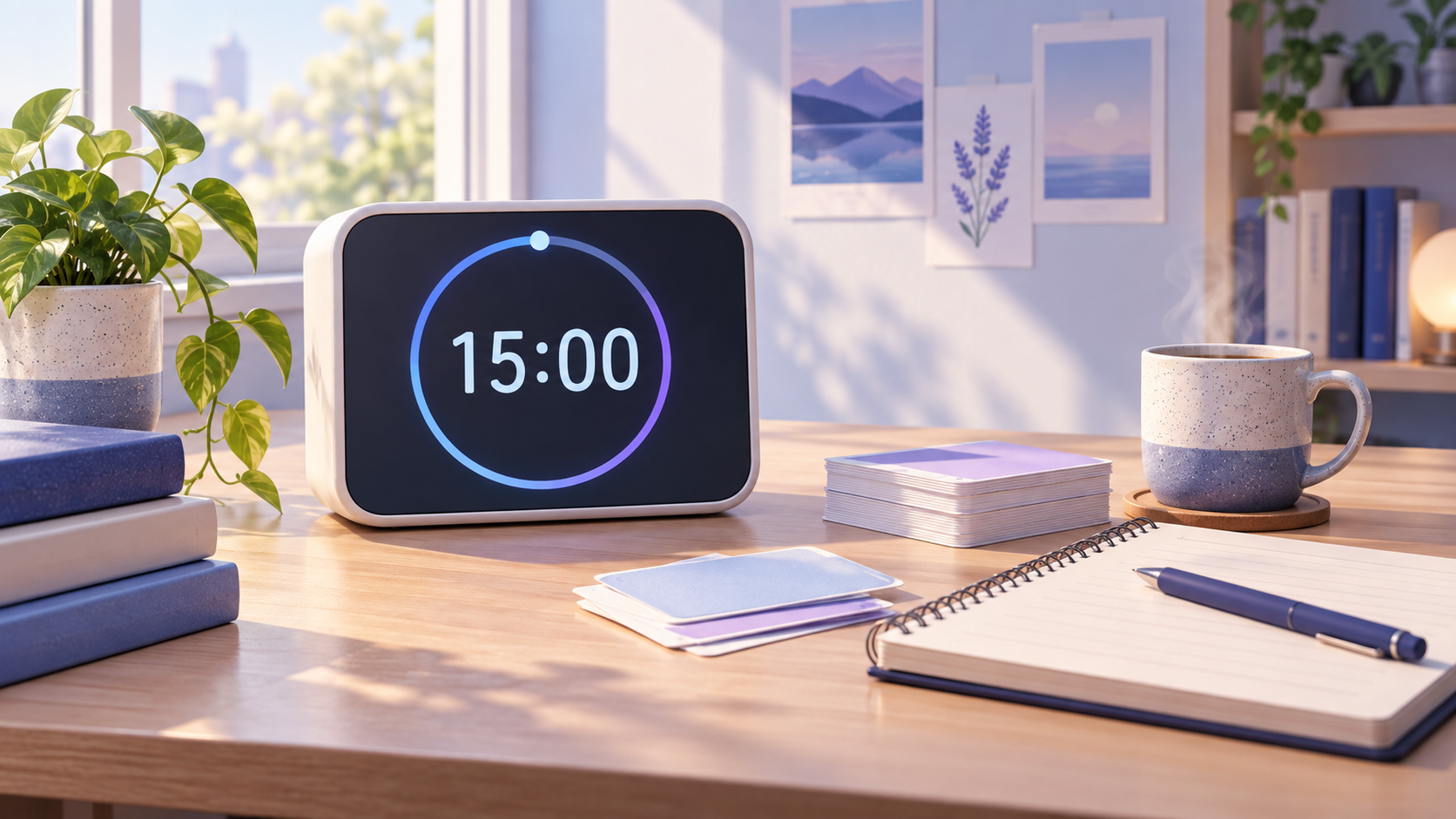
If the Pomodoro technique isn't working for you anymore, you're not alone. Thousands of students and professionals discover each year that this popular productivity method—working in focused 25-minute intervals separated by 5-minute breaks—stops delivering results after the initial honeymoon period.
Here's the truth most productivity articles won't tell you: the problem usually isn't your motivation or discipline. The problem is that you're using a one-size-fits-all technique on a brain that needs something more personalized.
The Pomodoro technique, developed by Francesco Cirillo in the late 1980s, has helped millions of people improve their focus and productivity. But it was never meant to be a rigid formula. When students and workers complain about Pomodoro problems, they're often following the classic 25/5 ratio without considering their unique cognitive needs, task types, or environmental factors.
This article will show you exactly why the Pomodoro technique fails—and give you 10 research-backed fixes you can try today. Whether you're dealing with ADHD, study burnout, or just can't seem to maintain study consistency, these modifications will help you reclaim your productivity.
Why the Pomodoro Technique Stops Working
Before diving into solutions, let's understand why this productivity technique fails for so many people.
Mental Fatigue and Cognitive Overload
Your brain isn't a machine. After several Pomodoro cycles, your mental stamina naturally depletes—especially if you're tackling cognitively demanding tasks like advanced mathematics or essay writing. Research in cognitive psychology shows that decision fatigue accumulates throughout the day, making later Pomodoros significantly harder than morning sessions.
Wrong Task Size
Trying to cram a three-hour research project into 25-minute chunks creates artificial stopping points that disrupt deep work. Conversely, using Pomodoros for quick emails wastes the setup time needed to enter focus mode. Task-technique mismatch is one of the most common Pomodoro fixes needed.
Phone and Digital Distraction
Even with a timer running, your phone sits there—glowing, buzzing, tempting. Studies show that merely having your smartphone visible reduces available cognitive capacity, even when it's turned off. The classic Pomodoro technique doesn't address modern digital distraction adequately.
Burnout and Emotional Resistance
Sometimes Pomodoro technique problems aren't technical—they're emotional. If you're experiencing academic burnout or studying subjects that trigger anxiety, no timer will magically dissolve that resistance. Your brain associates the Pomodoro timer with stress rather than productivity.
ADHD and Neurodivergent Challenges
For people with ADHD or other neurodivergent conditions, the standard 25/5 ratio can feel arbitrary and frustrating. ADHD brains often need either shorter bursts of hyperfocus or longer periods once they finally achieve flow state. The rigid structure can work against natural attention patterns.
Physical Discomfort and Environment
Poor posture, inadequate lighting, uncomfortable temperatures, or noisy environments sabotage focus regardless of which productivity technique you're using. External factors matter more than most productivity advice acknowledges.
10 Fixes When the Pomodoro Technique Isn't Working
Ready to troubleshoot? Try these evidence-based modifications to transform how you use this study productivity method.
1. Adjust Your Work-Break Ratio
The 25/5 ratio isn't sacred. Experiment with different intervals:
- 52/17 method: Work for 52 minutes, break for 17. Research by the Draugiem Group found this was the optimal ratio for highly productive employees.
- 40/10 method: Better for sustained deep work on complex tasks.
- 15/3 method: Ideal for ADHD brains or when starting from severe procrastination.
- 90-minute cycles: Align with your ultradian rhythms (natural energy cycles) for maximum cognitive performance.
Track which ratio gives you the best combination of focus quality and sustainable energy. Your ideal rhythm might change based on time of day or task difficulty.
2. Use Task Batching Instead of Constant Switching
Stop fragmenting your work unnecessarily. Group similar tasks together and dedicate multiple Pomodoros to one type of work. For example:
- Batch all reading assignments together
- Do all problem sets in one session
- Handle all emails and administrative tasks in a designated block
Context-switching depletes mental energy faster than sustained work. Batching reduces the cognitive load of transitioning between different types of thinking.
3. Break Tasks Into "Minimum Viable Goals"
Instead of "write essay," your Pomodoro goal should be "write three sentences of the introduction" or "outline main argument." This psychological trick—setting minimum goals—reduces activation energy and prevents overwhelm.
When the task feels manageable, you're more likely to enter flow state and continue beyond your minimum target. This approach is particularly effective for overcoming procrastination on large projects.
4. Remove Phone Triggers Completely
Don't just put your phone on silent—that's not enough. Implement aggressive phone management:
- Airplane mode during study sessions
- App blockers like Freedom or Forest
- Physical separation: leave your phone in another room
- Grayscale mode: removing colors makes your phone less stimulating
Research consistently shows that even resisting the urge to check your phone consumes willpower. Elimination beats moderation for serious focus improvement.
5. Try "Reverse Pomodoro": Work Until Focus Drops
Instead of working for a predetermined time, work until you notice your focus naturally declining—then take a break. This respects your brain's actual attention capacity rather than imposing arbitrary limits.
Mark the time when focus drops. After a week, you'll identify your natural rhythm, which might be 18 minutes some days and 45 minutes others. This flexibility often works better than rigid timing, especially for creative or deep work.
6. Use Sensory Resets During Breaks
Most people waste breaks scrolling social media, which doesn't actually restore cognitive function. Instead, try these science-backed break activities:
- Movement: Even 2 minutes of walking improves blood flow to the brain
- Sunlight exposure: Natural light regulates circadian rhythms and boosts alertness
- Cold water on face or wrists: Activates the parasympathetic nervous system
- Stretching: Releases physical tension that accumulates during focused work
- Deep breathing: 4-7-8 breathing technique reduces stress hormones
These sensory resets help you return to work genuinely refreshed rather than just killing time.
7. Switch to "Silent Pomodoro" for Reading or Deep Work
When studying material that requires deep comprehension—like dense textbooks or research papers—the timer itself becomes a distraction. Your subconscious tracks time remaining, which creates pressure and reduces comprehension.
For these tasks, use a "silent Pomodoro": set a timer but hide it from view, or simply work until you complete a natural section (one chapter, one paper, one problem set). This removes the anxiety of watching the clock while maintaining structure.
8. Use Accountability Partners to Force Consistency
Studying alone makes it too easy to abandon your Pomodoro session when things get difficult. Accountability transforms productivity from an internal struggle to a social commitment.
This is where tools like Academync become incredibly powerful. The platform's Shared Pomodoro Rooms let you study virtually alongside other students in real-time. You see their timers running, which creates gentle peer pressure to stay focused—the "body doubling" effect that psychologists have found dramatically improves task completion for both neurotypical and ADHD individuals.
Unlike basic timer apps, Academync provides:
- Clean, distraction-free interface designed specifically for focused study
- Study streaks and progress tracking that build motivation through visible achievement
- Virtual co-studying environment that replicates the accountability of studying in a library
- Community motivation without the chaos of social media
The combination of structure, accountability, and community addresses the three main reasons people abandon the Pomodoro technique: lack of external motivation, environment-based distraction, and feeling isolated in their struggles.
9. Try ADHD-Friendly Modifications
If you have ADHD or suspect attention difficulties, the standard Pomodoro technique often needs significant modification:
- Start with 10-minute work blocks: Build gradually rather than setting unrealistic 25-minute goals
- Use body doubling: Study with someone else (in person or virtually) to anchor your attention
- Incorporate movement: Try standing desks, fidget tools, or walking while reviewing notes
- Make starting ridiculously easy: "Just open the textbook" rather than "study for 25 minutes"
- Reward immediately: Give yourself a small treat after each completed session
The body doubling feature is particularly crucial—which is why platforms like Academync that offer shared study rooms can be transformative for ADHD students who struggle with traditional solo Pomodoro sessions.
10. Use a Better Tool Instead of a Basic Timer
Your phone's timer or a mechanical kitchen timer doesn't provide the psychological scaffolding many people need for sustained focus. Modern study productivity tools offer:
- Visual progress indicators that satisfy the need to see advancement
- Automatic tracking to identify your most productive times and patterns
- Community features that reduce the isolation of solo studying
- Distraction blocking to remove temptation during work sessions
Academync specifically addresses the most common reasons the Pomodoro technique fails by combining timer functionality with accountability, community, and distraction-free design. The shared rooms create the psychological presence of studying "with" others, which research shows significantly improves focus and reduces procrastination—especially for students who find motivation difficult.
How Academync Makes Pomodoro Actually Work
Let's be honest: most Pomodoro apps are just glorified timers. They don't address why people abandon the technique in the first place.
Academync takes a different approach by recognizing that productivity isn't just about time management—it's about creating the right psychological environment for focus.
The Power of Virtual Body Doubling
One of the most researched concepts in ADHD and productivity science is "body doubling"—the phenomenon where having another person present (even virtually) significantly improves task initiation and completion. Academync's Shared Pomodoro Rooms harness this effect by letting you see other students' timers running simultaneously.
You're not chatting or interacting—just studying in parallel. This subtle awareness of others working creates accountability without distraction, making it dramatically easier to start and maintain focus sessions.
Clean Interface Designed for Focus
Unlike productivity apps cluttered with features, notifications, and gamification elements that become distractions themselves, Academync prioritizes simplicity. The interface shows you exactly what you need—timer, progress, and optional study companions—without overwhelming your already-taxed attention.
Study Streaks Build Consistency
Motivation follows action, not the reverse. Academync tracks your study streaks, showing how many consecutive days you've completed focused work. This visible progress creates compound motivation: each day you maintain your streak, abandoning it becomes psychologically costlier.
Perfect for Students Who Need External Accountability
If you've ever said "I study better in the library than at home," you understand environmental accountability. Academync recreates that library effect digitally, giving you the structure of studying alongside others without requiring you to leave home—ideal for late-night study sessions, bad weather, or commuter students.
When to Use Pomodoro—and When NOT To
Understanding when this technique serves you versus when it hinders you is crucial for long-term productivity.
Best Uses for Pomodoro
- Mechanical tasks: Practice problems, flashcard review, data entry
- When procrastinating: The "just 25 minutes" promise lowers activation energy
- Long study days: Structured breaks prevent burnout over 4-6 hour sessions
- Building new habits: The structure helps establish consistent study routines
When to Skip Pomodoro
- Deep creative work: Writing, design, or complex problem-solving often requires 2-3 hour flow states
- Already in flow: If you're genuinely focused, don't interrupt yourself arbitrarily
- Low-energy days: Sometimes gentle, unstructured work is better than forcing strict timing
- Very short tasks: Using Pomodoro for 10 minutes of email wastes more time than it saves
The key is flexibility. The Pomodoro technique is a tool, not a religion. Use it when it serves you; abandon it when it doesn't.
Extra Tips to Improve Focus and Reduce Burnout
Even the best productivity technique fails if your basic physiology isn't supported. These fundamentals matter more than any time management hack.
Prioritize Sleep Quality
You can't focus your way through sleep deprivation. Research consistently shows that sleeping less than 7 hours dramatically impairs attention, memory consolidation, and decision-making. If you're sacrificing sleep to study more, you're actually studying less effectively.
Stay Hydrated Throughout Study Sessions
Even mild dehydration (1-2% body water loss) significantly impairs cognitive performance. Keep water at your desk and drink regularly during Pomodoro breaks. Your brain is 75% water—it needs adequate hydration to function optimally.
Implement a Task Planning Ritual
Spend 5 minutes before each study session clarifying exactly what you'll accomplish. Vague intentions like "study biology" lead to wasted time deciding what to do. Specific plans like "complete practice problems 15-30 from chapter 7" make focus automatic.
Maintain Realistic Expectations
You probably can't sustain 8 hours of perfect Pomodoro sessions daily. Most people manage 4-6 hours of genuinely focused work at their peak. Expecting more sets you up for disappointment and burnout. Build your schedule around realistic productivity, not idealized fantasy.
Frequently Asked Questions
Why is the Pomodoro technique not working for me?
The Pomodoro technique stops working for several common reasons: you're using the wrong work-break ratio for your brain's natural rhythms, your tasks aren't properly sized for 25-minute chunks, you haven't eliminated phone and digital distractions, you're experiencing study burnout that no technique can override, or you have ADHD or attention differences that require modified timing. The technique itself isn't broken—it just needs personalization to match your specific cognitive patterns and work context.
How do I fix Pomodoro burnout?
Pomodoro burnout happens when you've pushed through too many sessions without adequate recovery. Fix it by: taking a complete day off from structured productivity, switching to longer work periods with longer breaks (like 52/17), incorporating more active breaks with movement and sunlight, reducing your daily Pomodoro target to rebuild gradually, and addressing underlying factors like poor sleep or overwhelming workload. Sometimes the best fix is acknowledging you need rest more than productivity.
Does Pomodoro work for ADHD students?
The standard Pomodoro technique often struggles for ADHD students, but modified versions work excellently. ADHD-friendly adaptations include: shorter work periods (10-15 minutes) to match attention span, body doubling through platforms like Academync's shared study rooms, incorporating movement or fidget tools during work sessions, making starting incredibly easy with minimum viable goals, and using immediate rewards after each session. The key is flexibility—ADHD brains often benefit from structure but struggle with rigidity.
Should Pomodoro be used for long study sessions?
Yes, but with modifications. For study sessions longer than 3 hours, the standard 25/5 Pomodoro ratio needs adjustment. Try using longer work periods (40-50 minutes) with proportionally longer breaks (10-15 minutes), take a substantial 30-minute break every 2-3 hours, incorporate movement and outdoor time during longer breaks, and allow flexibility to work longer if you're in genuine flow state. The Pomodoro structure prevents burnout during marathon sessions, but don't let the timer interrupt deep focus unnecessarily.
What is the best Pomodoro timer for students?
The best Pomodoro timer goes beyond basic timing to address why productivity fails. Academync stands out specifically for students because it combines timer functionality with shared study rooms for accountability (addressing the body doubling effect), provides clean, distraction-free design that doesn't add to cognitive load, tracks study streaks to build consistent habits, and creates virtual co-studying environments that replicate library productivity at home. While basic timers work mechanically, platforms designed for student focus address the psychological barriers that actually prevent consistent studying.
Can I use Pomodoro for reading and comprehension tasks?
Yes, but consider using "silent Pomodoro" for deep reading. Set a timer but hide it from view, or work until you complete a natural section (one chapter, one article) rather than stopping mid-thought. For reading that requires high comprehension, like academic papers or dense textbooks, the visible countdown creates subconscious pressure that actually reduces understanding. Maintain the break structure to prevent mental fatigue, but don't let arbitrary time limits interrupt your comprehension flow.
Conclusion: Your Productivity System Should Serve You
If the Pomodoro technique isn't working, that doesn't mean you're lazy, undisciplined, or incapable of focus. It means the standard formula doesn't match your brain's needs—and that's completely normal.
The most successful students and professionals don't rigidly follow productivity advice. They experiment, observe what actually works for their unique cognitive patterns, and build personalized systems that provide structure without suffocation.
Start by trying 2-3 of the fixes from this article. Track what happens. Notice when focus improves and when it doesn't. Productivity is personal—your ideal system will look different from everyone else's.
And if you're struggling with consistency and motivation, remember that environment matters as much as technique. Tools like Academync exist specifically because productivity isn't just about willpower—it's about creating the right conditions for focus to happen naturally.
The Pomodoro technique, properly adapted, remains one of the most effective productivity methods available. You just need to make it yours.
Ready to fix your focus? Try implementing these Pomodoro modifications this week. Experiment with different work-break ratios, eliminate your phone completely during study sessions, and consider joining virtual study rooms to harness the power of accountability. Your perfect productivity rhythm is waiting to be discovered—you just need to give yourself permission to find it.