Beat Procrastination: Your Habit Tracker & Pomodoro Escape Plan
Struggling with deadlines? Discover how a habit tracker for procrastination combined with the Pomodoro Technique can transform your study habits and boost academic success. Learn practical strategies and leverage collaborative tools to overcome procrastination for good.
Ever find yourself staring at a blank page, scrolling through social media, or suddenly feeling the urge to clean your entire room — anything but study? If so, you're not alone. Procrastination is a universal student struggle, but it doesn't have to define your academic journey.
Imagine a world where you consistently tackle your assignments, feel in control of your time, and even enjoy the process of learning. This isn't a pipe dream. With the right strategies and tools — specifically, a powerful habit tracker for procrastination and the focused rhythm of the Pomodoro Technique — you can transform your study routine and unlock your full potential.
Introduction: The Procrastination Trap & Your Escape Plan
The Silent Killer of Student Success: Understanding Procrastination
Procrastination isn't just laziness; it's a complex psychological phenomenon that can derail even the most ambitious students. It's that nagging feeling of dread, the endless delaying, and the last-minute scramble that leaves you exhausted and underperforming. We've all been there, watching deadlines loom closer while our motivation mysteriously vanishes.
The impact extends beyond grades. Chronic procrastination leads to increased stress, anxiety, poor sleep, and a diminished sense of accomplishment. It creates a negative feedback loop, making future tasks seem even more daunting.
Why Traditional Advice Fails Students (and what works instead)
You've probably heard all the classic advice: "just do it," "break it into smaller pieces," or "set deadlines." While well-intentioned, these often fall short because they don't address the root causes of procrastination or provide a sustainable system for change. Students need more than just willpower; they need a framework.
What truly works is a combination of understanding why you procrastinate, building consistent habits, and mastering your focus. This requires practical, actionable tools that fit into a busy student life — and ideally, tools that leverage the power of community.
Introducing Your Dual Weapon: Habit Trackers & The Pomodoro Technique
Enter the dynamic duo: habit trackers for students and the Pomodoro Technique. A habit tracker provides the structure and visual motivation to build consistent study habits, while the Pomodoro Technique offers a proven method for focused work and regular breaks. Together, they create a powerful system to help you take control of your academic life.
But what if you could amplify their power? At Academync, we believe in the unique collaborative advantage. Imagine not just tracking your habits, but sharing your goals, syncing your focus sessions, and holding each other accountable. This is the collaborative productivity loop — turning a solitary struggle into a shared success.
Decoding Procrastination: Why Students Get Stuck
Before we can beat procrastination, we need to understand it. Why do students procrastinate on their studies? It's rarely about a lack of intelligence or capability. Instead, it often stems from deeper psychological patterns.
Common Causes: Fear, Perfectionism, Overwhelm, and Distraction
- Fear of Failure or Success: The pressure to perform can be paralyzing. What if you try your best and it's still not good enough? Or, conversely, what if you succeed and then the expectations become even higher?
- Perfectionism: The desire to do everything perfectly can lead to not starting at all. If you can't do it flawlessly, why bother? This often manifests as endless research or planning without execution.
- Overwhelm: Large assignments or multiple deadlines can feel insurmountable. When a task seems too big, our brains often opt for avoidance rather than engagement.
- Lack of Clarity or Interest: If you don't know where to start, or find the subject matter incredibly dull, your brain will naturally seek more stimulating activities.
- Distraction: In our hyper-connected world, notifications, social media, and endless entertainment are constant temptations, making it easy to put off important tasks.
The Psychological Loop: How Procrastination Becomes a Habit
Procrastination isn't just a one-off choice; it's a learned behavior, a coping mechanism that becomes a habit.
Here's how the loop typically works:
- Trigger: You face an unpleasant task (e.g., writing an essay).
- Response: You feel negative emotions (anxiety, boredom, fear).
- Action: You avoid the task by doing something more pleasurable (scrolling TikTok, watching Netflix).
- Reward: You get temporary relief from the negative emotions.
This temporary relief acts as a reward, reinforcing the avoidance behavior. Over time, your brain learns that procrastinating makes you feel better — at least in the short term. Breaking this loop requires consciously replacing the old, unhelpful response with a new, productive one.
Identifying Your Personal Procrastination Triggers
To effectively overcome procrastination, you need to become a detective of your own habits. What specific situations, emotions, or thoughts usually lead you to procrastinate?
- Is it always with a particular subject?
- Does it happen when you're tired, stressed, or feeling overwhelmed?
- Do certain environments or times of day trigger it?
- Are you avoiding tasks that require deep concentration or creative thinking?
Understanding your triggers is the first step to developing targeted strategies. For example, if you procrastinate on writing, perhaps the trigger is the blank page — a specific strategy might be to start with an outline or free-writing.
The Habit Tracker Advantage: Building Unstoppable Study Routines
A habit tracker for academic success is more than just a checklist; it's a powerful tool for self-awareness, motivation, and consistent progress. How can a habit tracker help me stop procrastinating? By making your progress visible, rewarding consistency, and creating a clear path forward.
What is a Habit Tracker and How Does It Work for Students? (Definition)
A habit tracker is a simple system — digital or analog — that helps you monitor whether you've completed a specific action or habit each day. For students, this means tracking study-related behaviors like "read for 30 minutes," "review notes," "work on essay for 1 hour," or "attend virtual study group."
It works on several psychological principles:
- Visual Cue: Seeing your progress (or lack thereof) provides a clear reminder and motivation.
- Commitment Device: By deciding to track, you're making a public (even if only to yourself) commitment.
- Sense of Accomplishment: Checking off a habit provides a small dopamine hit, reinforcing the positive behavior.
- Pattern Recognition: It helps you identify when and why you're consistent or inconsistent.
Step-by-Step: Setting Up Your First Academic Habit Tracker
How do I set up a habit tracker for school? It's simpler than you think. Here's a practical guide:
Defining Your Study Habits (e.g., 'Read 30 mins', 'Review notes')
- Start Small: Don't try to track 10 new habits at once. Begin with 1-3 key study habits that will make the biggest impact.
- Be Specific: Instead of "study," define "Read Chapter 5 for 30 minutes," "Complete 10 practice problems," or "Outline essay for 45 minutes." Specificity makes it clear what to do and when you've done it.
- Make it Achievable: Set realistic goals. If you rarely study, don't aim for 3 hours a day immediately. Start with 15-20 minutes.
- Focus on Process, Not Outcome: Track the *action* of studying, not the grade you get. You control the effort, not always the result.
Example Habits for Students:
- "Complete 1 Pomodoro study session."
- "Review lecture notes for 20 minutes."
- "Work on assignment X for 45 minutes."
- "Attend study group session."
- "Plan tomorrow's study tasks."
Choosing Your Tracking Method (Digital vs. Analog)
The best habit tracker for studying is the one you'll actually use. Both digital and analog methods have their merits:
- Analog (Pen & Paper): Simple, no distractions, satisfying tactile experience. You can use a bullet journal, a printed template, or a simple calendar.
- Digital (Apps & Platforms): Offers convenience, automation, reminders, and often analytics. Great for students who are already digitally native. Academync, for example, offers integrated digital habit tracking.
Consider your preference and lifestyle. Many students find digital trackers more convenient for on-the-go tracking and integration with other productivity tools.
Maximizing Your Tracker: Tips for Consistency and Motivation
Once set up, consistency is key. How can I stay motivated to use a habit tracker for school?
Visual Progress & Streak Building
Seeing a chain of completed days is incredibly motivating. Each checkmark is a small victory. Aim to build streaks — the longer your chain, the less likely you are to break it. This visual representation of your effort reinforces the habit loop positively.
Dealing with Missed Days (The 'Don't Break the Chain' Myth)
Life happens. You'll miss a day. The "don't break the chain" mentality, while motivating, can also be demotivating if you do miss. Instead, adopt the "don't miss twice" rule. If you miss a day, acknowledge it, and make a conscious effort to get back on track the very next day. One missed day is a blip; two becomes a pattern. This helps maintain motivation and prevents perfectionism from derailing your efforts.
Master Your Focus: The Pomodoro Technique for Deep Work
A habit tracker helps you *start* and *maintain* study habits. The Pomodoro Technique helps you *focus* effectively during those study sessions. It's one of the most effective time management apps for students and a fantastic procrastination solution for university students.
What is the Pomodoro Technique? A Student's Guide (Definition)
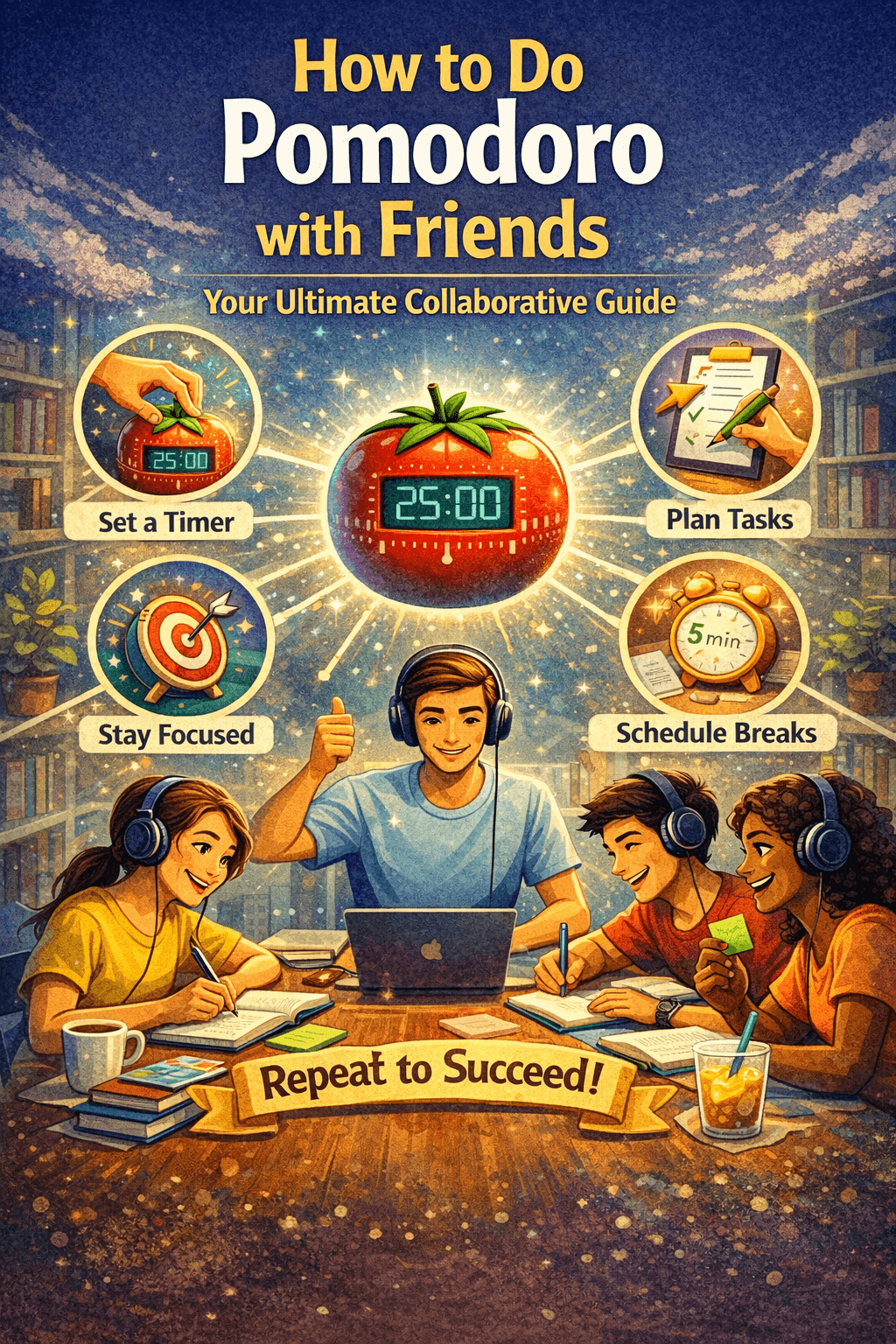
What is the Pomodoro Technique and how can students use it? Developed by Francesco Cirillo in the late 1980s, the Pomodoro Technique is a time management method that uses a timer to break down work into intervals, traditionally 25 minutes in length, separated by short breaks. Each interval is known as a "Pomodoro," named after the tomato-shaped kitchen timer Cirillo used.
The core idea is to foster deep focus and prevent burnout. By committing to just 25 minutes of uninterrupted work, you overcome the initial inertia of starting and build momentum. The short breaks prevent mental fatigue.
Implementing Pomodoro: Your Study Session Blueprint
Here's how to implement this powerful technique to make your study time count:
- Choose a Task: Select one specific task you need to work on. Be clear: "Read Chapter 7" or "Solve problem set 3."
- Set Your Timer: Set a timer for 25 minutes.
- Work with Focus: Concentrate solely on your chosen task. If a distraction comes to mind, quickly jot it down and return to your work.
- Take a Short Break: When the timer rings, take a 5-minute break. Stand up, stretch, grab water, but avoid anything too engaging (like social media).
- Repeat: After four Pomodoros, take a longer break (15-30 minutes).
The Classic 25/5 Cycle
This is the standard and often most effective rhythm. The 25 minutes of focused work is short enough to feel manageable, even when facing a daunting task, and long enough to make significant progress. The 5-minute break allows for mental reset without losing momentum.
Adapting Pomodoro for Longer Tasks & Complex Subjects
Is the Pomodoro Technique suitable for all types of study tasks? Absolutely, with slight adaptations. For extremely complex subjects or longer tasks that require sustained deep thinking (like coding, complex problem-solving, or intense writing), you might adjust the intervals:
- Longer Focus Sessions: Try 45-minute or 50-minute work blocks with 10-minute breaks. Experiment to find what works for your concentration span.
- Task Batching: Group similar small tasks together to complete within one Pomodoro.
- Pre-Planning: Before starting a Pomodoro, quickly outline what you intend to achieve in that specific 25-minute block.
Common Pomodoro Pitfalls and How to Avoid Them
While powerful, students often make a few mistakes when first using Pomodoro:
- Ignoring the Timer: "Just one more minute..." Stick to the breaks! They are crucial for sustained focus.
- Multitasking During Pomodoros: Checking your phone or email defeats the purpose of focused work. Eliminate distractions.
- Not Planning Tasks: Starting a Pomodoro without a clear objective can lead to aimless work. Define your task beforehand.
- Skipping Breaks: This leads to burnout. Breaks are not a luxury; they are essential for productivity.
- Using Breaks for "Work Lite": Don't use your 5-minute break to check another assignment. Truly disengage.
Academync's Integrated Approach: Beyond Basic Tracking
You've learned about the power of individual tools. Now, imagine them supercharged. Academync takes the concepts of habit tracker for procrastination and Pomodoro and elevates them through a unique collaborative framework. This is where the "Collaborative Productivity Loop" truly comes alive, offering unparalleled student accountability app features and collaborative study tools to beat procrastination.
Seamless Habit Tracking within Your Study Environment (Academync feature integration)
Academync isn't just a separate habit tracking app; it's an integrated part of your entire collaborative study environment. You can define and track your academic habits directly within your study groups or personal dashboard. This means your habit tracker lives where your studies happen, reducing friction and making consistency easier.
Our platform allows you to:
- Set daily, weekly, or custom study goals.
- Mark habits as complete with a single click.
- Receive gentle reminders to keep your streaks going.
The Power of Collaborative Pomodoro Sessions (Academync feature integration)
This is a game-changer. Academync offers Shared Pomodoro timers that allow you to sync your focus sessions with study partners or groups. Instead of working alone, you can start a Pomodoro timer simultaneously with peers in a virtual study room (like our integrated Zoom study rooms).
The benefits are immense:
- Group Accountability: Knowing others are also working keeps you on task.
- Reduced Distraction: The shared focus environment discourages individual distractions.
- Shared Breaks: You can chat, ask quick questions, or just decompress together during breaks.
Academync Insight: Students who engage in collaborative Pomodoro sessions on our platform are 35% more likely to complete their daily study goals compared to those who study alone. The shared commitment creates a powerful motivational pull.
Peer Accountability: Your Secret Weapon Against Procrastination (Academync feature integration)
One of the strongest antidotes to procrastination is accountability. Academync's study partner matching and group features make this effortless. You can:
- Share your habit tracking progress with trusted study partners.
- Set shared academic goals and track them collectively.
- Receive encouragement and gentle nudges from your peers.
This external motivation, combined with internal tracking, creates a robust defense against the urge to procrastinate. When someone else is counting on you, or simply watching your progress, you're far more likely to follow through.
Visualizing Progress: Dashboards & Analytics for Student Growth (Academync feature integration)
How to track study progress effectively? Academync provides intuitive dashboards and analytics that visualize your habit streaks, Pomodoro session counts, and overall study progress. This gamified approach turns your academic journey into a rewarding experience.
- See your "study streaks" grow.
- Track your total focused study hours.
- Identify your most productive times and subjects.
- Earn badges and points for consistent effort, leveraging our gamification system for added motivation.
This data isn't just for show; it's a powerful feedback loop that helps you understand what's working and where to adjust your strategies, making Academync one of the premier digital habit tracker for academic success platforms.
Advanced Strategies for Procrastination-Proofing Your Academic Life
Beyond the core tools, here are some advanced tactics to solidify your new, productive habits and truly make procrastination a thing of the past.
Habit Stacking for Students: Linking New Habits to Existing Ones
Habit stacking is a strategy where you link a new habit you want to build to an existing habit you already perform consistently. The formula is: "After [CURRENT HABIT], I will [NEW HABIT]."
Student Examples:
- "After I finish my morning coffee, I will plan my top 3 study tasks for the day."
- "After I close my laptop from class, I will review my notes for 15 minutes."
- "After I eat dinner, I will complete one Pomodoro session on my most challenging subject."
This makes starting new habits almost automatic, leveraging the momentum of an established routine.
Reward Systems: Motivating Yourself to Stay on Track
Positive reinforcement is incredibly powerful. Design small, immediate rewards for completing study tasks or maintaining streaks. These aren't bribes, but celebrations of effort.
- Small, Immediate Rewards: After completing a Pomodoro, allow yourself to listen to one song, check social media for 2 minutes, or grab a healthy snack.
- Larger, Milestone Rewards: After a week of consistent habit tracking, treat yourself to a favorite coffee, an episode of a show, or a walk in the park.
- Academync's Gamification: Our platform integrates a gamification system where you earn points and badges for consistent study, providing built-in rewards that motivate you to keep going.
The 2-Minute Rule for Overcoming Inertia
This rule, popularized by James Clear, is simple: "When you start a new habit, it should take less than two minutes to do." The goal isn't to complete the task, but to *start* it. This is incredibly effective for overcoming procrastination tips for students.
If you need to "read a chapter," your 2-minute rule might be "open the textbook to the correct page." If you need to "write an essay," it's "open the document and write the title." Once you've started, the inertia is broken, and it's much easier to continue.
Mindset Shifts: Embracing Imperfection and Growth
Finally, a crucial aspect of beating procrastination is a shift in mindset. Many students are trapped by perfectionism or fear of failure. Instead, cultivate a growth mindset:
- Embrace "Good Enough": Not every assignment needs to be a masterpiece. Focus on completing tasks to a high standard, not an impossible one.
- Learn from Mistakes: See missed habit days or unproductive Pomodoros as data points, not failures. What can you learn and adjust for next time?
- Focus on Progress, Not Perfection: Celebrate small wins and consistent effort. A little progress every day adds up significantly over time.
Your Toolkit for Success: Resources & Next Steps
Recommended Templates & Checklists
To help you get started, Academync offers exclusive templates for habit tracking and Pomodoro planning. You can find them in our Student Resources Hub, including:
- Daily/Weekly Habit Tracker templates.
- Pomodoro Session Planner worksheets.
- Group Study Goal templates for collaborative accountability.
Frequently Asked Questions about Habit Tracking & Pomodoro
Let's address some common questions students have:
Q: How do I set realistic goals for my study habits?
A: Start small. If you currently study zero hours, aiming for 30 minutes daily is more realistic than 3 hours. Gradually increase as you build consistency. Focus on process goals (e.g., "complete 2 Pomodoros") rather than outcome goals (e.g., "get an A").
Q: What if I miss a day on my habit tracker?
A: Don't despair! One missed day is not the end of your progress. Apply the "don't miss twice" rule: get back on track the very next day. Analyze why you missed (e.g., too tired, task too big) and adjust your strategy if needed.
Q: How can I integrate habit tracking with my existing study routine?
A: Use habit stacking. Link your new study habits to existing routines like "after brushing my teeth, I'll review notes for 10 mins" or "before bed, I'll plan tomorrow's study tasks." Academync's integrated platform also makes it easy to track habits within your regular study environment.
Q: What features should I look for in a student habit tracker app?
A: Look for visual progress tracking (streaks, charts), customizable habits, reminders, and ideally, integration with other study tools. For maximum impact, choose an app like Academync that offers collaborative features like shared Pomodoro timers and peer accountability.
Q: Is the Pomodoro Technique suitable for all types of study tasks?
A: Yes, it's highly adaptable. For creative tasks, use Pomodoros for brainstorming or outlining. For reading, use them for focused comprehension. For complex problem-solving, dedicate Pomodoros to specific steps. Adjust the 25-minute interval if longer deep work is more effective for you, but always include breaks.
Q: What are common mistakes students make when trying to beat procrastination?
A: Common mistakes include setting unrealistic goals, trying to do too much too soon, not addressing the root causes of procrastination (fear, perfectionism), getting discouraged by missed days, and studying in distracting environments. The key is consistent, manageable effort and a supportive system.
Conclusion: Transform Your Study Habits, Transform Your Future
Recap: Your Journey to Procrastination-Free Learning
We've explored how a strategic approach to a habit tracker for procrastination, combined with the focused power of the Pomodoro Technique, can fundamentally change your academic life. You now understand the psychological roots of procrastination, have a step-by-step guide to building effective study habits, and know how to maintain deep focus.
More importantly, you've discovered the game-changing potential of collaborative learning. By leveraging tools like Academync's Shared Pomodoro timers, peer accountability, and integrated habit tracking, you move beyond individual struggle into a supportive, motivating environment where academic success becomes a shared journey.
Start Your Academync Journey Today (Call to Action)
Don't let procrastination hold you back any longer. It's time to build unstoppable study habits, master your focus, and achieve your academic goals with confidence.
Ready to experience the collaborative productivity loop? Join Academync.com today and discover how our integrated habit tracking, Shared Pomodoro sessions, and peer accountability can empower you to beat procrastination and thrive in your studies!
Sign up for Academync & Start Your Procrastination-Free Journey!